Elijah Davidson and Jonathan Stoner discuss Birdman.
Part VI of our ongoing discussion series with Think Christian.
Elijah Davidson and Matt Lumpkin discuss electronic film scores.
It’s still controversial today to suggest that there might have been ways to end the war without the near-supernatural fire from the sky in Japan, or the total devastation wrought agains the German people…
Watching well means developing a sense of wonder and curiosity about things we don’t encounter in our everyday lives: types of people, for instance, or parts of the world, or ways of thinking…
Gone Girl and the films of David Fincher.
Elijah Davidson and Jonathan Stoner discuss (some of) the films of William Friedkin.
Eliot’s work seems to suggest that God is more active, more present, and more at home in the people and places at the fringes of our society. That may seem like a crazy idea, but it doesn’t take a bible scholar to know that this is at the heart of the gospel…
Part IV of our ongoing discussion series with Think Christian.
Jessi Knippel, Eugene Suen, and Elijah Davidson discuss The Hundred Foot Journey, Something to Chew On, and Boyhood.
Elijah Davidson and Avril Speaks discuss The Cosby Show.
Part two of our twenty week discussion of the Decalogue.
Life has those ups and downs, and that’s ok. As ugly as it is, and as much as I don’t want to do that again, we have to learn that by going through it…
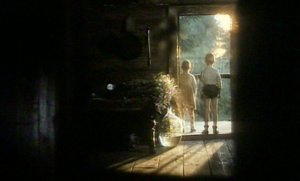
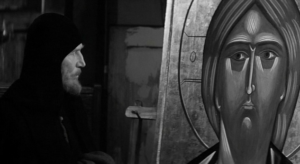
We watch and then immediately discuss Andrei Tarkovsky’s Andrei Rublev.
We don’t hear many stories about good priests these days…
The argument Hiccup uses in How To Train Your Dragon 2 sounds like Heston’s, but it is actually the same argument used by another activist group—dog lovers.
We watch and then immediately discuss Andrei Tarkovsky’s Andrei Rublev.
In Hank and Asha, we have a wonderful example of friends who become lovers (sort of), but remain true to themselves. Theirs is a technology of learning and exposure, not of cloaking and artifice…
What are we, Reel Spirituality, going to do about this other than campaign for this repositioning? What practical steps are we going to take to help you, our readers, and the broader film-loving community better value other perspectives?
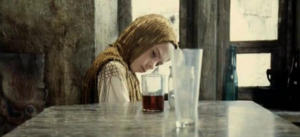
We watch and then immediately discuss Andrei Tarkovsky’s Stalker.
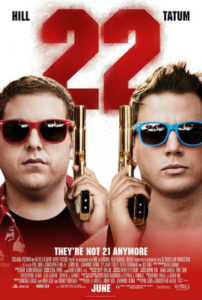
like to think of 22 Jump Street’s self-awareness as a kind of protest against the fact that the filmmakers are being asked to make a sequel simply because the first film in the series was financially lucrative. It’s their way of saying, “We know what’s going on here.”