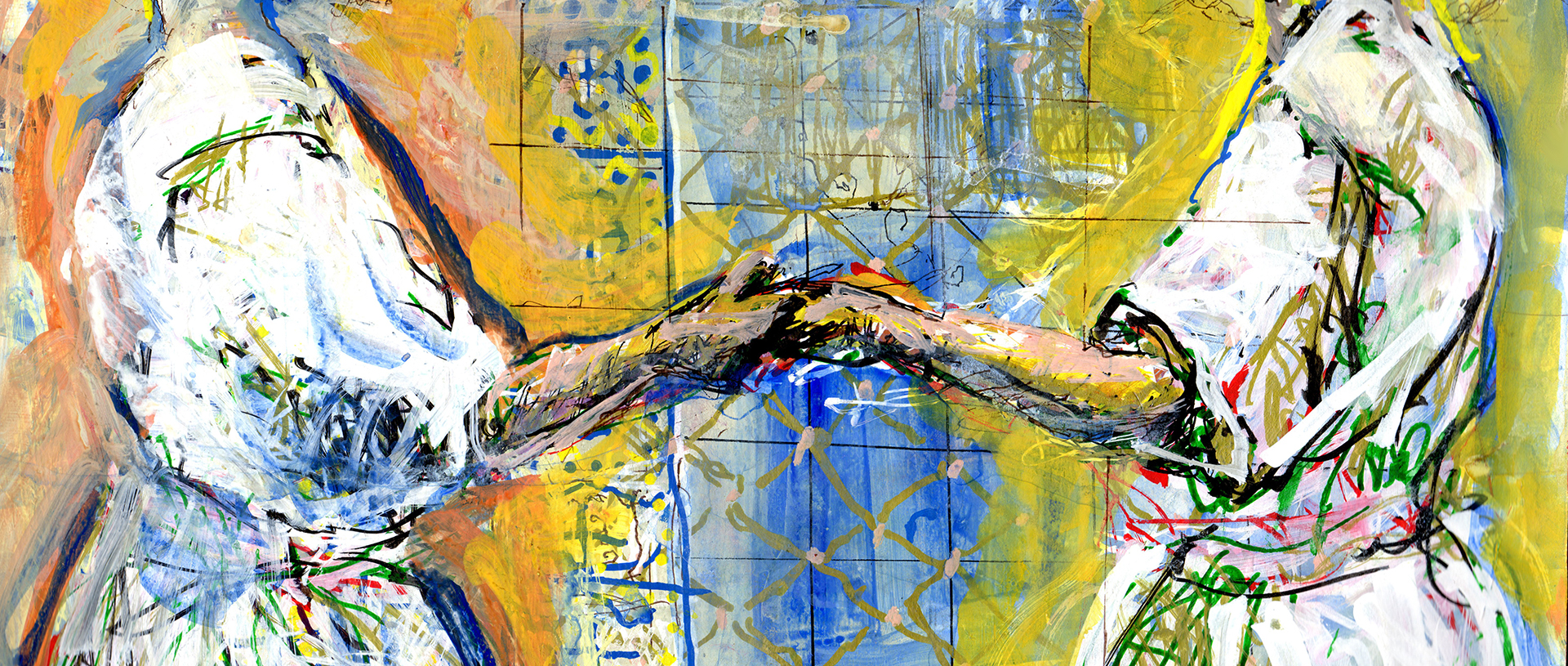

Illustration by Bea Rios
In the 1960s, profound transitions in consciousness and accompanying legislation changed the public awareness and status of minority communities and women in the United States. By the 1970s, this wave began to impact seminaries. Fuller Theological Seminary was one of the first in the country to realize that mission in and with minority communities in the US was important enough to the kingdom of God to deserve direct attention and investment. Out of that realization, and in collaboration with the American Baptist Theological Center, came the creation of the first Hispanic Studies program in Fuller’s School of Theology in 1974.
The Hispanic Studies program was seeded in good soil. The depth and breadth of Fuller’s commitment to global mission, along with its recognition of mission’s intellectual and social dimensions, were hospitable to Latino/a realities and cultures in ways that were—and are—uncommon in evangelical seminaries. Fuller’s historic respect for the ministry of women, a natural outgrowth of a commitment to holistic mission, has offered opportunities for Latinas that were not available elsewhere.
From these roots, Centro Latino has grown into a unique garden of theological education initiatives and programs, resulting in an abundant harvest of transnational leaders of the church.
Centro Latino is not for everyone. We have a particular niche and calling in the global ecosystem of Latino/a ministry and mission. I am here, as the first female academic dean of the Centro Latino, in the seventh decade of my life, because I believe so deeply in the urgent need for all that we bring at this kairos moment for the church and world. Here, I would like to describe Centro Latino’s particular calling through the lens of our six recently articulated core values and the stories of the men and women who embody them.
Value #1: Contextualization
After these things I looked, and behold, a great multitude which no one could count, from every nation and all the tribes, peoples and languages, standing before the throne and before the Lamb, clothed in white robes and palm branches were in their hands. (Revelation 7:9)
For just as the body is one and yet has many parts, and all the parts of the body, thought they are many are one body, so also is Christ. . . . But God has so composed the body, giving more abundant honor to the parts which lacked, so that there may be no division in the body, but that the parts may have the same care for one another.
(1 Cor 12:12, 24b–25)
Contextualization is the banner over our set of values. It is the foundation for the rest. What do we mean by contextualization?
A few years ago, I was teaching a course on formation. The text covered the Christian virtues, and the virtue for the week was “promise-keeping.” The author shared a story about her German grandfather whose word was his bond. If he made a promise, you knew that he would keep it. Reading that story, I thought of my grandfather, who believed that “el hombre propone pero Dios dispone” (people propose but God disposes). He did not believe that any human being could control the future. However, if anyone came to the door in need, he was relationally faithful. He would share whatever we had. The author of the text assumed that faithfulness is best expressed through promise keeping, an assumption that rests on a particular cultural view of the world not shared by those who lack that degree of control over their circumstances. Having both cultural perspectives on the table can create a rich dialogue about the meaning of the biblical call to faithfulness and integrity. Perhaps that is why at the end of all time in the book of Revelation, the nations are not divested of their particularities but rather come to the throne praising the one God in a multitude of languages. Maybe that is why each of the parts of the body are equally and infinitely precious—and why it is necessary to intentionally lift up the parts that have lacked honor, so that we can all see the importance of the gifts that each brings.
Centro Latino is dedicated to contextualization, to bringing the unique gifts of our cultural perspectives to the common work of the body of Christ and to the throne of the Lamb. For example, in the Latino/a universe, ministry is an international family business, and we seek to serve every member of the extended family in mission in ways that match their needs. We offer a master’s degree in theology and ministry in Spanish, an MDiv which includes Spanish and English classes, a Doctor of Ministry completely in Spanish led by a global leader in the Latin American theological world, and six professional certificate programs which require no prior academic history and are each focused on different aspects of contemporary ministry. We carry out research designed to document and share the unique gifts of our churches and communities (pueblos) so that we can see, celebrate, and nurture our own gifts and share them with the broader church. And we bring together sectors of our community for common envisioning.
Within our programs, we also aim for contextualization. Our academic courses prioritize texts written by Latino/a authors, from Latin America and the diaspora. Our professional certificates are created in partnership with Hispanic-led organizations and ministries. We have developed an original pedagogy based on collective methodologies to create ecclesial imagination.
While we recognize that we are a seminary whose physical campuses and historic roots are in the US, we believe that our calling is to be a global seminary—where the wineskins of Latino/a culture interact with the wineskins of other cultures from all over the world so that the true wine is experienced in greater depth and dimension. Our bilingual online and hybrid courses provide opportunities for this broader interaction.
Our global nature gives us a special capacity to equip global leaders. The church in the age of globalization needs leaders who are comfortable and skilled communicating across cultural barriers. The Latino/a church is gifted with leaders with the innate ability to solve international problems; Centro Latino is designed to enable them to fulfill their call.
A Story of Contextualization
The course “Globalization, the Poor, and Christian Mission” was taught bilingually for the first time in 2022. The class section in English used books from the English-speaking world, and the section in Spanish—instead of translated texts—used books written by authors from and in the Spanish-speaking world. The texts were profoundly different in focus and perspective. The lectures for each section integrated information from both sets of texts, pointing out the similarities and differences. Students from the two sections met for intensive dialogue three times during the quarter with translators interpreting. During the final reflection, a young woman from the US Midwest said that she had never realized that Hispanic pastors had so much to contribute to her understanding of mission and ministry. A young pastor from Mexico responded by saying that he had never realized before how much he had to offer the broader church and world.
Value #2: Holistic Mission
A voice was heard in Ramah, weeping and great mourning, Rachel weeping for her children; and she refused to be comforted because they were no more. (Matthew 2:18, Jeremiah 31:15)
“The Spirit of the Lord is upon me because he has anointed me to bring good news to the poor. He has sent me to proclaim release to the captives and recovery of sight to the blind, to set free those who are oppressed, to proclaim the favorable year of the Lord.” (Luke 4:16–20)
What is good news for Rachel? What does it mean to proclaim the good news of the gospel in places where unjust suffering is rampant and blatant? At Centro Latino, we are committed to the full integration of the proclamation and demonstration of the love of Christ—to a gospel that includes the promises of eternal and abundant life and is good news on every level to the poor and marginalized. In addition to courses in systematic theology and biblical studies, we offer courses in practical, public, and pastoral theology. Our curriculum includes wisdom from the fields of psychology, anthropology, and the art of social transformation taught through a Christian lens.
Stories of Holistic Mission
A student in a course which included public theology, a middle-aged evangelical Latino pastor in a small city in southeast Los Angeles county, decided that the suffering of his congregation and neighborhood because of police practices (police both neglecting needs for assistance and also harshly treating youth) was worthy of the attention of authorities. Even more, he believed this could signify an important call from God to their local leadership. Noting that the mayor was Hispanic, he approached her for a meeting. When he learned in the meeting that she was also a Christian, he shared his new insights with her about public responsibility before God. He then invited her to an event held by the Damas (women’s group) of the church. She came to the event and stayed after to talk to the women and hear their concerns. The mayor is now working with the church and, through the pastor’s outreach, with other Hispanic churches in the neighborhood to begin a dialogue with the police commission towards improving service. The pastor now speaks about how his understanding of the power and love of Jesus has grown. He says that he feels such joy being able to make a positive difference in his community, bringing voice to people who were formerly ignored and greater justice to their lives.
Value #3: The Full Ministry of Women
So God created humankind in his own image, in the image of God He created them, male and female He created them.
(Gen 1:27)
There is neither Jew nor Greek, there is neither slave nor free, there is neither male nor female, for you are all one in Christ Jesus. (Gal 3:28)
Holistic mission is a big task, a potentially overwhelming task. We need the full gifts of every member of the body of Christ to be used and coordinated to carry out the whole mission of God. Centro Latino has always educated and trained women for leadership in every kind of ministry. Centro Latino’s newest professional certificate program, Certificate in the Holistic Leadership of Latinas, equips Latinas from all walks of life to live out the fullness of their calling. The almost 50 women in the first cohort, started in October 2023, meet online in synchronized zoom sessions or in person monthly with small groups while working through their asynchronized assignments online at their own pace and schedule. In the sessions, the women connect their own stories with the biblical narratives and information from the broader disciplines of history, psychology, and sociology. Tears, laughter, personal transformation, and objective expansion of leadership roles occur frequently in and through the small group dialogues.
Stories of the Full Ministry of Women
In our Spanish Doctor of Ministry, a woman who has served her Catholic diocese for years in the development of lay leaders is carrying out a doctoral project focused on increasing the spiritual leadership of immigrant women. She believes that this project will lift up and make visible the gifts and calling of immigrant women; she has already found personally a greater strength and confidence in her own calling as a result.
Men also are awakened to the full potential of their sisters in Christ in Centro Latino programs. One evangelical pastor who was sent as a missionary to the US came into our master’s program convinced that women should not lead in church. He ended up supporting his wife as she also obtained her master’s, and they now work together as a ministry team. He says that a turning point was a New Testament course where the professor suddenly addressed the class using the female word endings. He was incensed, and then he realized how women must feel when they are excluded.
Value #4: Practical Application
Fuller Seminary’s recent description of our mission in the 21st century uses the word “indispensable” to refer to the education that we aspire to provide. “Indispensable” includes the understanding that the church is the ultimate judge of the value of our education. We exist to serve the body of Christ. In service to this goal, we seek in our pedagogy and the content of our courses and programs to be relevant to the changing times and to require our students and learners to apply the concepts learned at Centro Latino to their daily lives and ministries. We use a reflection-action modality, giving assignments that directly impact the
local context and then calling for an analysis of the experience in light of the assigned texts.
Story of Practical Application
In the pastoral theology course, students are asked to design a wedding service, drawing on the concepts of practical theology. One of the students had been in the ministry for over 20 years, but he had never before asked himself about the various divine purposes that might be fulfilled through a wedding service—not only for the couple but also for their extended family, their other guests, and their church. He was amazed by how this intentional praxis (reflected practice) changed and deepened his preparation. When he reported back to the group, he shared with excitement about his discoveries about the integration of mission and ministry as well as the opportunities for discipleship in the life ceremonies of the church.
Value #5: Education With and in the Community
A central aspect of practical education is encountering the Holy Spirit already at work in the community. We do not bring God to the world; we discern and discover God at work in the world, learning as we go how we can participate in his holy and beautiful work.
Centro Latino seeks to work in partnership with community ministries in all our work, and we also provide our students with theological and practical principles that equip them for effective partnership. Our professional certificate programs are made in partnership with Tearfund Latin America, IFES Latin America (the International Federation of Evangelical Students), Urban Strategies, Sojourners, Comunidad Shalom, and Digna (a foundation focused on serving Latinas). We have close working relationships with a variety of denominations. Our recent webinars focused on the benefits and relevance of theological education for Pentecostals were done in partnership with La Iglesia de Dios de la Profecía. World Vision Latin America and AETH (Asociación para la Educación Teológica Hispana) have also walked with us in events and in convening leaders for dialogue. The first ever Summit of Latinx Millennial Christian Leaders revitalizing the church was led collaboratively by AETH and Centro Latino, and supported by the Louisville Institute. We are now working with the Center for Asian American Theology and Ministry and the William E. Pannell Center for Black Church Studies, with support from the Ministry in the City Hub, on a joint project to help local pastors in Southern California work together multiculturally to engage their congregations in their cities.
Our research projects have also been carried out and disseminated in partnership. Dr. Robert Chao Romero of the Brown Church Institute has been our primary research partner, but we have also worked closely with Urban Strategies and the Fuller Youth Institute. Our research methodology is also participatory, as we utilize research assistants from the populations being studied and served.
A Story of Education with the Community
In 2021, the Christian Council of Colleges and Universities gave us a grant to engage students in the community. We utilized graduates of our professional certificate in the Church’s Response to the Migration Crisis to become mentors in the academic course “Migration, Transnationalism, Identity and Mission.” The mentors, who were local pastors and immigrants or children of migrants, worked with both English-speaking and Spanish-speaking students to help them arrive at a deeper understanding of the church’s ministry with migrants in the face of an international immigration crisis. For some of the English-speaking students, being mentored by immigrant pastors was a truly transformative experience. Our Spanish-speaking students were inspired by the examples of the mentors’ comprehensive migrant ministries.
Value #6: Inclusive and Mutual Pedagogy
Do nothing out of selfish ambition or vain conceit. Rather, in humility value others above yourselves, not looking to your own interests but each of you to the interests of the others. (Philippians 2:3–5)
The academic world is not known for its posture of humility. Unfortunately, the Christian academic world does not always do better in imitating the servant role of Jesus. Our cultural and sociopolitical context as Latinos/as often produces an even greater sensitivity to questions of power, status, and honor. The colonial inheritance influences us to submit when we should be bold and to dominate when we are given power. At the same time, we also stand on traditions of collective, mutual care that can help us to live into the servant leadership of Jesus Christ.
For the formation of our students and learners in our context, it is essential that the education we provide utilizes a fully inclusive and mutual pedagogy. Our professors are known for going the extra mile to build relationships with and between our students. We also often write en conjunto (in collaboration) with other scholars instead of writing as lone authors, taking advantage of the collective wisdom rather than prioritizing the advancement of individual careers.
A Story of Inclusive and Mutual Pedagogy
My doctoral dissertation focused on equipping Hispanic immigrant pastors for holistic mission. I studied Centro Latino graduates, examining the relationship between their theological education and their mission practices. We learned that Latino/a pastors studying at Centro Latino often experience a broadening of their vision of mission that they find difficult to put into practice in their congregations. We found that it was not enough for a seminary to succeed at creating pastoral imagination in Latino/a students; we needed to enable our students to create ecclesial imagination. Ministry is a collective endeavor in our communities, requiring extended family and familial-style networks of leaders who work together to accomplish the goals. If these networks do not grasp and endorse a broader vision of mission that includes social transformation, it will not occur.
We have incorporated that insight into the pedagogy used in our professional certificates. Although the program is online, each participant shows some of the videos on a weekly basis to a small group in their ministry and leads a discussion. Once a month, a group of participants meets in a synchronized session with a mentor to discuss the experience. By the time the program is over, a small group in the participant’s ministry is fully on board with implementing an action plan putting into practice all that they have learned.
Conclusion
These core values of Centro Latino echo the values of humility and mutuality promoted through the seminary, along with Fuller’s values of integrity and mercy, as well as encouraging the maintenance of healthy rhythms, accountability, and intergenerational communication. When we live out and into our values, Centro Latino has a particular calling for this kairos moment in the church and world. For 50 years, we have developed Latino/a leaders who can integrate a broad spectrum of cultural and theological insights to solve contemporary problems and shine the light of the eternal gospel into the contemporary culture. May we be faithful to our call!
Alexia Salvatierra is academic dean for Centro Latino, associate professor of mission and global transformation, and founding developer and coordinator of the Diplomado en la Respuesta de la Iglesia a la Crisis Migratoria (Professional Certificate in the Church’s Response to the Immigration Crisis). An ordained Lutheran pastor, she has over 40 years of experience in local, national, and international ministry, including church-based community development programs, congregational/community organizing, and legislative advocacy. Dr. Salvatierra is the coauthor of Faith-Rooted Organizing: Mobilizing the Church in Service to the World and Buried Seeds: Learning from the Vibrant Resilience of Marginalized Christian Communities.
In the 1960s, profound transitions in consciousness and accompanying legislation changed the public awareness and status of minority communities and women in the United States. By the 1970s, this wave began to impact seminaries. Fuller Theological Seminary was one of the first in the country to realize that mission in and with minority communities in the US was important enough to the kingdom of God to deserve direct attention and investment. Out of that realization, and in collaboration with the American Baptist Theological Center, came the creation of the first Hispanic Studies program in Fuller’s School of Theology in 1974.
The Hispanic Studies program was seeded in good soil. The depth and breadth of Fuller’s commitment to global mission, along with its recognition of mission’s intellectual and social dimensions, were hospitable to Latino/a realities and cultures in ways that were—and are—uncommon in evangelical seminaries. Fuller’s historic respect for the ministry of women, a natural outgrowth of a commitment to holistic mission, has offered opportunities for Latinas that were not available elsewhere.
From these roots, Centro Latino has grown into a unique garden of theological education initiatives and programs, resulting in an abundant harvest of transnational leaders of the church.
Centro Latino is not for everyone. We have a particular niche and calling in the global ecosystem of Latino/a ministry and mission. I am here, as the first female academic dean of the Centro Latino, in the seventh decade of my life, because I believe so deeply in the urgent need for all that we bring at this kairos moment for the church and world. Here, I would like to describe Centro Latino’s particular calling through the lens of our six recently articulated core values and the stories of the men and women who embody them.
Value #1: Contextualization
After these things I looked, and behold, a great multitude which no one could count, from every nation and all the tribes, peoples and languages, standing before the throne and before the Lamb, clothed in white robes and palm branches were in their hands. (Revelation 7:9)
For just as the body is one and yet has many parts, and all the parts of the body, thought they are many are one body, so also is Christ. . . . But God has so composed the body, giving more abundant honor to the parts which lacked, so that there may be no division in the body, but that the parts may have the same care for one another.
(1 Cor 12:12, 24b–25)
Contextualization is the banner over our set of values. It is the foundation for the rest. What do we mean by contextualization?
A few years ago, I was teaching a course on formation. The text covered the Christian virtues, and the virtue for the week was “promise-keeping.” The author shared a story about her German grandfather whose word was his bond. If he made a promise, you knew that he would keep it. Reading that story, I thought of my grandfather, who believed that “el hombre propone pero Dios dispone” (people propose but God disposes). He did not believe that any human being could control the future. However, if anyone came to the door in need, he was relationally faithful. He would share whatever we had. The author of the text assumed that faithfulness is best expressed through promise keeping, an assumption that rests on a particular cultural view of the world not shared by those who lack that degree of control over their circumstances. Having both cultural perspectives on the table can create a rich dialogue about the meaning of the biblical call to faithfulness and integrity. Perhaps that is why at the end of all time in the book of Revelation, the nations are not divested of their particularities but rather come to the throne praising the one God in a multitude of languages. Maybe that is why each of the parts of the body are equally and infinitely precious—and why it is necessary to intentionally lift up the parts that have lacked honor, so that we can all see the importance of the gifts that each brings.
Centro Latino is dedicated to contextualization, to bringing the unique gifts of our cultural perspectives to the common work of the body of Christ and to the throne of the Lamb. For example, in the Latino/a universe, ministry is an international family business, and we seek to serve every member of the extended family in mission in ways that match their needs. We offer a master’s degree in theology and ministry in Spanish, an MDiv which includes Spanish and English classes, a Doctor of Ministry completely in Spanish led by a global leader in the Latin American theological world, and six professional certificate programs which require no prior academic history and are each focused on different aspects of contemporary ministry. We carry out research designed to document and share the unique gifts of our churches and communities (pueblos) so that we can see, celebrate, and nurture our own gifts and share them with the broader church. And we bring together sectors of our community for common envisioning.
Within our programs, we also aim for contextualization. Our academic courses prioritize texts written by Latino/a authors, from Latin America and the diaspora. Our professional certificates are created in partnership with Hispanic-led organizations and ministries. We have developed an original pedagogy based on collective methodologies to create ecclesial imagination.
While we recognize that we are a seminary whose physical campuses and historic roots are in the US, we believe that our calling is to be a global seminary—where the wineskins of Latino/a culture interact with the wineskins of other cultures from all over the world so that the true wine is experienced in greater depth and dimension. Our bilingual online and hybrid courses provide opportunities for this broader interaction.
Our global nature gives us a special capacity to equip global leaders. The church in the age of globalization needs leaders who are comfortable and skilled communicating across cultural barriers. The Latino/a church is gifted with leaders with the innate ability to solve international problems; Centro Latino is designed to enable them to fulfill their call.
A Story of Contextualization
The course “Globalization, the Poor, and Christian Mission” was taught bilingually for the first time in 2022. The class section in English used books from the English-speaking world, and the section in Spanish—instead of translated texts—used books written by authors from and in the Spanish-speaking world. The texts were profoundly different in focus and perspective. The lectures for each section integrated information from both sets of texts, pointing out the similarities and differences. Students from the two sections met for intensive dialogue three times during the quarter with translators interpreting. During the final reflection, a young woman from the US Midwest said that she had never realized that Hispanic pastors had so much to contribute to her understanding of mission and ministry. A young pastor from Mexico responded by saying that he had never realized before how much he had to offer the broader church and world.
Value #2: Holistic Mission
A voice was heard in Ramah, weeping and great mourning, Rachel weeping for her children; and she refused to be comforted because they were no more. (Matthew 2:18, Jeremiah 31:15)
“The Spirit of the Lord is upon me because he has anointed me to bring good news to the poor. He has sent me to proclaim release to the captives and recovery of sight to the blind, to set free those who are oppressed, to proclaim the favorable year of the Lord.” (Luke 4:16–20)
What is good news for Rachel? What does it mean to proclaim the good news of the gospel in places where unjust suffering is rampant and blatant? At Centro Latino, we are committed to the full integration of the proclamation and demonstration of the love of Christ—to a gospel that includes the promises of eternal and abundant life and is good news on every level to the poor and marginalized. In addition to courses in systematic theology and biblical studies, we offer courses in practical, public, and pastoral theology. Our curriculum includes wisdom from the fields of psychology, anthropology, and the art of social transformation taught through a Christian lens.
Stories of Holistic Mission
A student in a course which included public theology, a middle-aged evangelical Latino pastor in a small city in southeast Los Angeles county, decided that the suffering of his congregation and neighborhood because of police practices (police both neglecting needs for assistance and also harshly treating youth) was worthy of the attention of authorities. Even more, he believed this could signify an important call from God to their local leadership. Noting that the mayor was Hispanic, he approached her for a meeting. When he learned in the meeting that she was also a Christian, he shared his new insights with her about public responsibility before God. He then invited her to an event held by the Damas (women’s group) of the church. She came to the event and stayed after to talk to the women and hear their concerns. The mayor is now working with the church and, through the pastor’s outreach, with other Hispanic churches in the neighborhood to begin a dialogue with the police commission towards improving service. The pastor now speaks about how his understanding of the power and love of Jesus has grown. He says that he feels such joy being able to make a positive difference in his community, bringing voice to people who were formerly ignored and greater justice to their lives.
Value #3: The Full Ministry of Women
So God created humankind in his own image, in the image of God He created them, male and female He created them.
(Gen 1:27)
There is neither Jew nor Greek, there is neither slave nor free, there is neither male nor female, for you are all one in Christ Jesus. (Gal 3:28)
Holistic mission is a big task, a potentially overwhelming task. We need the full gifts of every member of the body of Christ to be used and coordinated to carry out the whole mission of God. Centro Latino has always educated and trained women for leadership in every kind of ministry. Centro Latino’s newest professional certificate program, Certificate in the Holistic Leadership of Latinas, equips Latinas from all walks of life to live out the fullness of their calling. The almost 50 women in the first cohort, started in October 2023, meet online in synchronized zoom sessions or in person monthly with small groups while working through their asynchronized assignments online at their own pace and schedule. In the sessions, the women connect their own stories with the biblical narratives and information from the broader disciplines of history, psychology, and sociology. Tears, laughter, personal transformation, and objective expansion of leadership roles occur frequently in and through the small group dialogues.
Stories of the Full Ministry of Women
In our Spanish Doctor of Ministry, a woman who has served her Catholic diocese for years in the development of lay leaders is carrying out a doctoral project focused on increasing the spiritual leadership of immigrant women. She believes that this project will lift up and make visible the gifts and calling of immigrant women; she has already found personally a greater strength and confidence in her own calling as a result.
Men also are awakened to the full potential of their sisters in Christ in Centro Latino programs. One evangelical pastor who was sent as a missionary to the US came into our master’s program convinced that women should not lead in church. He ended up supporting his wife as she also obtained her master’s, and they now work together as a ministry team. He says that a turning point was a New Testament course where the professor suddenly addressed the class using the female word endings. He was incensed, and then he realized how women must feel when they are excluded.
Value #4: Practical Application
Fuller Seminary’s recent description of our mission in the 21st century uses the word “indispensable” to refer to the education that we aspire to provide. “Indispensable” includes the understanding that the church is the ultimate judge of the value of our education. We exist to serve the body of Christ. In service to this goal, we seek in our pedagogy and the content of our courses and programs to be relevant to the changing times and to require our students and learners to apply the concepts learned at Centro Latino to their daily lives and ministries. We use a reflection-action modality, giving assignments that directly impact the
local context and then calling for an analysis of the experience in light of the assigned texts.
Story of Practical Application
In the pastoral theology course, students are asked to design a wedding service, drawing on the concepts of practical theology. One of the students had been in the ministry for over 20 years, but he had never before asked himself about the various divine purposes that might be fulfilled through a wedding service—not only for the couple but also for their extended family, their other guests, and their church. He was amazed by how this intentional praxis (reflected practice) changed and deepened his preparation. When he reported back to the group, he shared with excitement about his discoveries about the integration of mission and ministry as well as the opportunities for discipleship in the life ceremonies of the church.
Value #5: Education With and in the Community
A central aspect of practical education is encountering the Holy Spirit already at work in the community. We do not bring God to the world; we discern and discover God at work in the world, learning as we go how we can participate in his holy and beautiful work.
Centro Latino seeks to work in partnership with community ministries in all our work, and we also provide our students with theological and practical principles that equip them for effective partnership. Our professional certificate programs are made in partnership with Tearfund Latin America, IFES Latin America (the International Federation of Evangelical Students), Urban Strategies, Sojourners, Comunidad Shalom, and Digna (a foundation focused on serving Latinas). We have close working relationships with a variety of denominations. Our recent webinars focused on the benefits and relevance of theological education for Pentecostals were done in partnership with La Iglesia de Dios de la Profecía. World Vision Latin America and AETH (Asociación para la Educación Teológica Hispana) have also walked with us in events and in convening leaders for dialogue. The first ever Summit of Latinx Millennial Christian Leaders revitalizing the church was led collaboratively by AETH and Centro Latino, and supported by the Louisville Institute. We are now working with the Center for Asian American Theology and Ministry and the William E. Pannell Center for Black Church Studies, with support from the Ministry in the City Hub, on a joint project to help local pastors in Southern California work together multiculturally to engage their congregations in their cities.
Our research projects have also been carried out and disseminated in partnership. Dr. Robert Chao Romero of the Brown Church Institute has been our primary research partner, but we have also worked closely with Urban Strategies and the Fuller Youth Institute. Our research methodology is also participatory, as we utilize research assistants from the populations being studied and served.
A Story of Education with the Community
In 2021, the Christian Council of Colleges and Universities gave us a grant to engage students in the community. We utilized graduates of our professional certificate in the Church’s Response to the Migration Crisis to become mentors in the academic course “Migration, Transnationalism, Identity and Mission.” The mentors, who were local pastors and immigrants or children of migrants, worked with both English-speaking and Spanish-speaking students to help them arrive at a deeper understanding of the church’s ministry with migrants in the face of an international immigration crisis. For some of the English-speaking students, being mentored by immigrant pastors was a truly transformative experience. Our Spanish-speaking students were inspired by the examples of the mentors’ comprehensive migrant ministries.
Value #6: Inclusive and Mutual Pedagogy
Do nothing out of selfish ambition or vain conceit. Rather, in humility value others above yourselves, not looking to your own interests but each of you to the interests of the others. (Philippians 2:3–5)
The academic world is not known for its posture of humility. Unfortunately, the Christian academic world does not always do better in imitating the servant role of Jesus. Our cultural and sociopolitical context as Latinos/as often produces an even greater sensitivity to questions of power, status, and honor. The colonial inheritance influences us to submit when we should be bold and to dominate when we are given power. At the same time, we also stand on traditions of collective, mutual care that can help us to live into the servant leadership of Jesus Christ.
For the formation of our students and learners in our context, it is essential that the education we provide utilizes a fully inclusive and mutual pedagogy. Our professors are known for going the extra mile to build relationships with and between our students. We also often write en conjunto (in collaboration) with other scholars instead of writing as lone authors, taking advantage of the collective wisdom rather than prioritizing the advancement of individual careers.
A Story of Inclusive and Mutual Pedagogy
My doctoral dissertation focused on equipping Hispanic immigrant pastors for holistic mission. I studied Centro Latino graduates, examining the relationship between their theological education and their mission practices. We learned that Latino/a pastors studying at Centro Latino often experience a broadening of their vision of mission that they find difficult to put into practice in their congregations. We found that it was not enough for a seminary to succeed at creating pastoral imagination in Latino/a students; we needed to enable our students to create ecclesial imagination. Ministry is a collective endeavor in our communities, requiring extended family and familial-style networks of leaders who work together to accomplish the goals. If these networks do not grasp and endorse a broader vision of mission that includes social transformation, it will not occur.
We have incorporated that insight into the pedagogy used in our professional certificates. Although the program is online, each participant shows some of the videos on a weekly basis to a small group in their ministry and leads a discussion. Once a month, a group of participants meets in a synchronized session with a mentor to discuss the experience. By the time the program is over, a small group in the participant’s ministry is fully on board with implementing an action plan putting into practice all that they have learned.
Conclusion
These core values of Centro Latino echo the values of humility and mutuality promoted through the seminary, along with Fuller’s values of integrity and mercy, as well as encouraging the maintenance of healthy rhythms, accountability, and intergenerational communication. When we live out and into our values, Centro Latino has a particular calling for this kairos moment in the church and world. For 50 years, we have developed Latino/a leaders who can integrate a broad spectrum of cultural and theological insights to solve contemporary problems and shine the light of the eternal gospel into the contemporary culture. May we be faithful to our call!
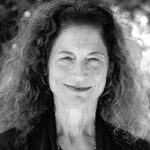
Alexia Salvatierra is academic dean for Centro Latino, associate professor of mission and global transformation, and founding developer and coordinator of the Diplomado en la Respuesta de la Iglesia a la Crisis Migratoria (Professional Certificate in the Church’s Response to the Immigration Crisis). An ordained Lutheran pastor, she has over 40 years of experience in local, national, and international ministry, including church-based community development programs, congregational/community organizing, and legislative advocacy. Dr. Salvatierra is the coauthor of Faith-Rooted Organizing: Mobilizing the Church in Service to the World and Buried Seeds: Learning from the Vibrant Resilience of Marginalized Christian Communities.
Oscar García-Johnson, professor of theology and Latino/a studies, writes about the current “crisis” of theological education and about the strides Centro Latino is making towards a hopeful future.