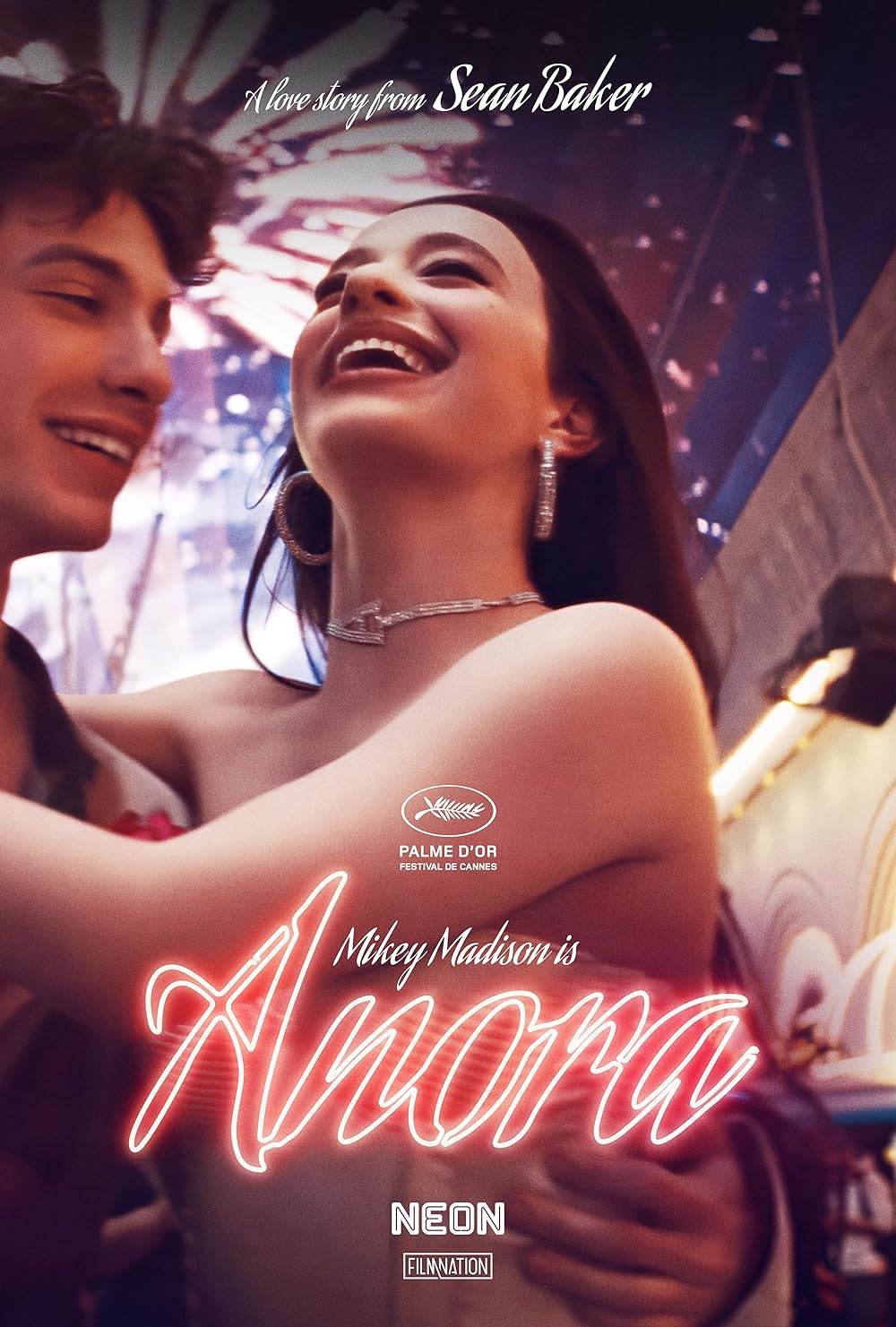
Anora is a stripper in a New Jersey strip club. She speak Russian, so, when a young Russian man – boy, really; he’s twenty – asks for a lap dance from a girl who speaks Russian, Anora gets the job. They hit it off. She’s willing to turn a trick on the side for the right amount of money. He hires her for a week of girlfriending, a la Pretty Woman, and they maybe fall in love and get married in an all-night Las Vegas chapel. Oh, oops, he’s the son of a Russian oligarch, and his parents, in Russia, aren’t happy about this marriage.
I just breezed through the first act of Anora in that description, and it still feels like it took longer to write and read than it does to actually watch. Sean Baker’s Palme d’Or winning film is so light on its feet, you’ll think you’re watching an Astaire and Rogers musical… if Fred played the son of a Russian oligarch and Ginger played a stripper. Maybe you’re agog that I just likened a movie about a sex worker to an Astaire and Rogers musical, but Anora has that kind of zany, romantic energy even if the physical feats are sexually explicit instead of balletically suggestive.
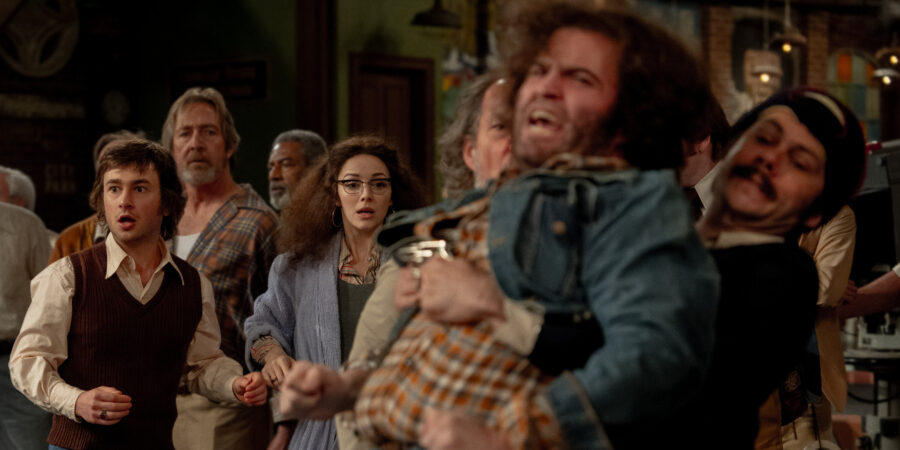
Then the goons show up to break up the marriage, and the movie spins off into screwball comedy territory if, given the intense realism of the film, you feared for the lives of the comedies’ screwy characters. Imagine a Jerry Lewis movie directed by Martin Scorsese. You don’t actually have to imagine that. Scorsese directed Lewis in The King of Comedy, but the movie I really have in mind is After Hours. That’s Scorsese’s Jerry Lewis movie. It just stars Griffin Dunne. Once the main plot kicks into motion, Anora is almost a “one crazy night in the city” movie. Almost. Those films tend to have an air of fantasy about them, and there is nothing fantastical in Baker’s style. He does realism with aesthetic flair. The style keeps the tension up.
Mikey Madison is electric as Anora/Ani. It’s a difficult part. Ani, as she likes to be called, has built a wall between her heart and the world. It’s necessary, probably, given the work she does. Her affair with Ivan (Mary Edyelshteyn) chisels a crack in that wall. This is a movie about a woman daring to believe that happiness is possible, that love is real, that she might be able to find mutual care and affection with another person. Baker shows us the world she lives in and why she’s so guarded. As audience, we long for the character to reveal her heart to us; as fellow humans we don’t want her to allow herself to be hurt. That tension is something we carry as we watch. Baker knows that’s the tension he and his actors and crew are creating. There is catharsis. Whew, boy is there ever.
After watching Anora, I made half way back to my car before I broke down sobbing. I hurried the rest of the way so that no one would see me ugly crying on the street.
On the street is probably where I should have released my emotions. Baker’s films are “on the street” movies. They feature people most of us only encounter on the street on our way from place to place. He elevates people pushed to the bottom of society. He invites us to bear witness to their humanity. He challenges us to sympathize with them while showing us how unsympathetic they can be. It’s bracing filmmaking. It’s moral filmmaking, but the morality is located in the filmmaking itself and in the audience’s reaction to it. Baker isn’t moralizing about the lives of his characters. He’s challenging us to be as brave in our response to the film as he is in making it. It’s a heart test like the ones the Italian Neorealists used to make when they showed the lives of the people the powerful forgot and demanded we create a better world for everyone to live in, a world where everyone feels safe enough to love and be loved.
Anora is a stripper in a New Jersey strip club. She speak Russian, so, when a young Russian man – boy, really; he’s twenty – asks for a lap dance from a girl who speaks Russian, Anora gets the job. They hit it off. She’s willing to turn a trick on the side for the right amount of money. He hires her for a week of girlfriending, a la Pretty Woman, and they maybe fall in love and get married in an all-night Las Vegas chapel. Oh, oops, he’s the son of a Russian oligarch, and his parents, in Russia, aren’t happy about this marriage.
I just breezed through the first act of Anora in that description, and it still feels like it took longer to write and read than it does to actually watch. Sean Baker’s Palme d’Or winning film is so light on its feet, you’ll think you’re watching an Astaire and Rogers musical… if Fred played the son of a Russian oligarch and Ginger played a stripper. Maybe you’re agog that I just likened a movie about a sex worker to an Astaire and Rogers musical, but Anora has that kind of zany, romantic energy even if the physical feats are sexually explicit instead of balletically suggestive.
Then the goons show up to break up the marriage, and the movie spins off into screwball comedy territory if, given the intense realism of the film, you feared for the lives of the comedies’ screwy characters. Imagine a Jerry Lewis movie directed by Martin Scorsese. You don’t actually have to imagine that. Scorsese directed Lewis in The King of Comedy, but the movie I really have in mind is After Hours. That’s Scorsese’s Jerry Lewis movie. It just stars Griffin Dunne. Once the main plot kicks into motion, Anora is almost a “one crazy night in the city” movie. Almost. Those films tend to have an air of fantasy about them, and there is nothing fantastical in Baker’s style. He does realism with aesthetic flair. The style keeps the tension up.
Mikey Madison is electric as Anora/Ani. It’s a difficult part. Ani, as she likes to be called, has built a wall between her heart and the world. It’s necessary, probably, given the work she does. Her affair with Ivan (Mary Edyelshteyn) chisels a crack in that wall. This is a movie about a woman daring to believe that happiness is possible, that love is real, that she might be able to find mutual care and affection with another person. Baker shows us the world she lives in and why she’s so guarded. As audience, we long for the character to reveal her heart to us; as fellow humans we don’t want her to allow herself to be hurt. That tension is something we carry as we watch. Baker knows that’s the tension he and his actors and crew are creating. There is catharsis. Whew, boy is there ever.
After watching Anora, I made half way back to my car before I broke down sobbing. I hurried the rest of the way so that no one would see me ugly crying on the street.
On the street is probably where I should have released my emotions. Baker’s films are “on the street” movies. They feature people most of us only encounter on the street on our way from place to place. He elevates people pushed to the bottom of society. He invites us to bear witness to their humanity. He challenges us to sympathize with them while showing us how unsympathetic they can be. It’s bracing filmmaking. It’s moral filmmaking, but the morality is located in the filmmaking itself and in the audience’s reaction to it. Baker isn’t moralizing about the lives of his characters. He’s challenging us to be as brave in our response to the film as he is in making it. It’s a heart test like the ones the Italian Neorealists used to make when they showed the lives of the people the powerful forgot and demanded we create a better world for everyone to live in, a world where everyone feels safe enough to love and be loved.

Elijah Davidson is Co-Director of Brehm Film and Senior Film Critic. Subscribe to Come & See, his weekly newsletter that guides you through the greatest films ever made, and find more of his work at elijahdavidson.com.
Will the show go to air? Of course it will. The fun is in watching all the little plots within the big plot arc and resolve.