When I was the lead pastor of a local congregation, our ministerial alliance created a chaplaincy program for the regional hospital in our county. Each participating pastor had a week to provide patient visits to those interested in having a chaplain stop by or be on call for emergencies. It was an important extension of the pastoral care that my colleagues and I provided beyond the scope of our memberships. The appreciation of those facing critical decision points—who struggled with the anxiety of uncertainties, with few or no visitors, and no pastoral relationships—was an affirmation of this kind of ministry. Chaplaincy is a vital ministry that touches many people beyond more traditional congregational ministries.
My bi-vocational brother is a congregation’s lead pastor and a hospice chaplain. He is blessed with both the temperament and the training to do this work well. He is wired and prepared for this ministry and has taught me much about the importance of ministry to the dying. Sometimes, churches minister to the families of the deceased reasonably well, or at least regularly. However, they often do not know how to walk alongside a person in the process of dying, whether over a few days or several months, as well as with their loved ones who need spiritual and practical help preparing for and walking through the valley of the shadow of death.
Recently, a couple of chaplains who work with professional athletic teams have entered my circle of relationships. I witnessed a coach talk about the weekly Bible studies that the chaplain facilitates, the personal and family conversations and interventions made, the discipleship ministry that happens with these talented young men, and the care that is necessary to walk people through challenging and vulnerable life circumstances. Being an athlete in the public eye—with the pressure to perform and exposure to constant professional and social media attention—is a heavy load to carry. The ministries of chaplains are important work in a space where the assumptions of invincibility are sometimes formed within the athletes and at other times projected onto them.
As a lead pastor, I was blessed to accompany volunteer chaplains in prison and campground ministries. The raw, earnest, and exuberant praise witnessed “behind bars” on those Monday nights was a fresh expression compared to the burden of polished and as-professional-as-can-be Sunday worship, especially when it is not always clear whether the “audience” of praise is God or the people in the pews. At these gatherings, there was not much familiarity with songs beyond “Amazing Grace,” and worship leaders and preachers had to depend on the Holy Spirit in particular ways.
Chaplaincy is a vital ministry that reaches people in life’s various stages and oftentimes across compressed periods of time. The long runway of congregational pastoral life can often be nonexistent, but the need for quality relating, assessing, anticipating, and responding is crucial. Chaplains often do not have the time to cultivate relationships or the freedom to connect with family members and networks. This is tough work. This is tender work. This is work that deserves high-quality preparation, and that is what Fuller Theological Seminary is providing intentionally.
We rejoice in our faculty members who bring to the instructional task their years of experience and education to nurture others for this privileged practice of ministry. The stories you’ll find in this edition of FULLER magazine reflect more of the beautiful dimensions of teaching, scholarship, and service that continue to make Fuller more of who Jesus wants us to be. Read. Reflect. Rejoice. Recommit yourself to a partnership that provides those who are called to the ministry of chaplaincy the support and network to help them serve well.

David Emmanuel Goatley, President
When I was the lead pastor of a local congregation, our ministerial alliance created a chaplaincy program for the regional hospital in our county. Each participating pastor had a week to provide patient visits to those interested in having a chaplain stop by or be on call for emergencies. It was an important extension of the pastoral care that my colleagues and I provided beyond the scope of our memberships. The appreciation of those facing critical decision points—who struggled with the anxiety of uncertainties, with few or no visitors, and no pastoral relationships—was an affirmation of this kind of ministry. Chaplaincy is a vital ministry that touches many people beyond more traditional congregational ministries.
My bi-vocational brother is a congregation’s lead pastor and a hospice chaplain. He is blessed with both the temperament and the training to do this work well. He is wired and prepared for this ministry and has taught me much about the importance of ministry to the dying. Sometimes, churches minister to the families of the deceased reasonably well, or at least regularly. However, they often do not know how to walk alongside a person in the process of dying, whether over a few days or several months, as well as with their loved ones who need spiritual and practical help preparing for and walking through the valley of the shadow of death.
Recently, a couple of chaplains who work with professional athletic teams have entered my circle of relationships. I witnessed a coach talk about the weekly Bible studies that the chaplain facilitates, the personal and family conversations and interventions made, the discipleship ministry that happens with these talented young men, and the care that is necessary to walk people through challenging and vulnerable life circumstances. Being an athlete in the public eye—with the pressure to perform and exposure to constant professional and social media attention—is a heavy load to carry. The ministries of chaplains are important work in a space where the assumptions of invincibility are sometimes formed within the athletes and at other times projected onto them.
As a lead pastor, I was blessed to accompany volunteer chaplains in prison and campground ministries. The raw, earnest, and exuberant praise witnessed “behind bars” on those Monday nights was a fresh expression compared to the burden of polished and as-professional-as-can-be Sunday worship, especially when it is not always clear whether the “audience” of praise is God or the people in the pews. At these gatherings, there was not much familiarity with songs beyond “Amazing Grace,” and worship leaders and preachers had to depend on the Holy Spirit in particular ways.
Chaplaincy is a vital ministry that reaches people in life’s various stages and oftentimes across compressed periods of time. The long runway of congregational pastoral life can often be nonexistent, but the need for quality relating, assessing, anticipating, and responding is crucial. Chaplains often do not have the time to cultivate relationships or the freedom to connect with family members and networks. This is tough work. This is tender work. This is work that deserves high-quality preparation, and that is what Fuller Theological Seminary is providing intentionally.
We rejoice in our faculty members who bring to the instructional task their years of experience and education to nurture others for this privileged practice of ministry. The stories you’ll find in this edition of FULLER magazine reflect more of the beautiful dimensions of teaching, scholarship, and service that continue to make Fuller more of who Jesus wants us to be. Read. Reflect. Rejoice. Recommit yourself to a partnership that provides those who are called to the ministry of chaplaincy the support and network to help them serve well.
David Emmanuel Goatley, President
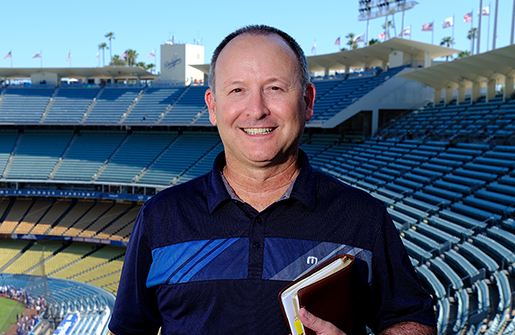
As chaplain for the Los Angeles Dodgers, Brandon Cash walks alongside others and witnesses the value of relationships, whether for a short time or a lifetime.