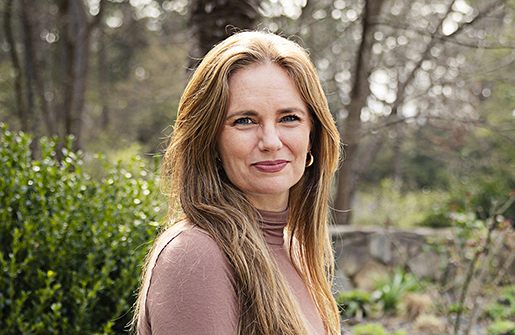
The way Brandon Cash (PhD ’20) sees it, from his vantage point on the field at Dodger Stadium, there are plenty of great things about being a chaplain in professional sports, including being around people who are excellent at what they do. But it can also be intimidating, he says. And it hasn’t come without growth and a fair share of lessons learned along the way.
Currently in his 14th season as the Los Angeles Dodgers chaplain, Brandon remembers the first time he was introduced to the team at spring training in 2011. “Guys that were my heroes as a kid were now on the coaching staff, walking into chapel and shaking my hand. I was just trying to play it cool.” Because chaplaincy hadn’t always been a part of the plan, he’s learned to trust in the sovereignty of God throughout his life, he says, as he’s watched God put all the pieces together.
Brandon grew up in a Christian home in Southern California as an avid sports fan and athlete, even attending college on a golf scholarship. Toward the end of his junior year, he recalls God’s Word coming alive to him. “As Scripture says, God can change the desires of our hearts. And during that time, I really sensed that God was calling me to pastoral ministry.” So, right after college, Brandon enrolled in seminary to become a pastor. After seminary, he began working at the church he’s still at today—this past summer marked 26 years there—where he works part-time while also being a full-time professor at Talbot School of Theology. “What’s funny is that I thought I wasted all of my college years caring about sports. Then it just so happened that the church I’ve been at all these years is right down the street from where the practice facilities of the Los Angeles Kings and the Los Angeles Lakers are.”
A mutual friend connected Brandon to a hockey player on the Kings team who was looking for someone in the Los Angeles area to disciple him. Discipleship with the hockey player turned into a Bible study with three or four other players for a few years. Then, out of the blue, he got a call. “Baseball Chapel, an organization that assigns chaplains to all the major and minor league baseball teams, called me looking for a chaplain for the Dodgers. They flew out and interviewed me, and toward the end of 2010, I was appointed chaplain.”
What he soon realized was to be a good chaplain he needed to surrender his own intimidation and preconceived notions. “A huge element to being a chaplain in professional sports is that everybody wants something from these players. Serving these guys has to mean that I don’t want anything from them. The more confident we are that we’re secure in Christ, the freer we are to serve others without any expectation or need to use people to get something. The temptation for me is to forget that I don’t need to impress these guys. I can’t impress these guys!”

Chantelle Gibbs-Tarca is content producer and managing editor of FULLER magazine.
Chase Tarca is an artist and filmmaker based in Los Angeles. Find more of his work at chaseyourvision.com.
The way Brandon Cash (PhD ’20) sees it, from his vantage point on the field at Dodger Stadium, there are plenty of great things about being a chaplain in professional sports, including being around people who are excellent at what they do. But it can also be intimidating, he says. And it hasn’t come without growth and a fair share of lessons learned along the way.
Currently in his 14th season as the Los Angeles Dodgers chaplain, Brandon remembers the first time he was introduced to the team at spring training in 2011. “Guys that were my heroes as a kid were now on the coaching staff, walking into chapel and shaking my hand. I was just trying to play it cool.” Because chaplaincy hadn’t always been a part of the plan, he’s learned to trust in the sovereignty of God throughout his life, he says, as he’s watched God put all the pieces together.
Brandon grew up in a Christian home in Southern California as an avid sports fan and athlete, even attending college on a golf scholarship. Toward the end of his junior year, he recalls God’s Word coming alive to him. “As Scripture says, God can change the desires of our hearts. And during that time, I really sensed that God was calling me to pastoral ministry.” So, right after college, Brandon enrolled in seminary to become a pastor. After seminary, he began working at the church he’s still at today—this past summer marked 26 years there—where he works part-time while also being a full-time professor at Talbot School of Theology. “What’s funny is that I thought I wasted all of my college years caring about sports. Then it just so happened that the church I’ve been at all these years is right down the street from where the practice facilities of the Los Angeles Kings and the Los Angeles Lakers are.”
A mutual friend connected Brandon to a hockey player on the Kings team who was looking for someone in the Los Angeles area to disciple him. Discipleship with the hockey player turned into a Bible study with three or four other players for a few years. Then, out of the blue, he got a call. “Baseball Chapel, an organization that assigns chaplains to all the major and minor league baseball teams, called me looking for a chaplain for the Dodgers. They flew out and interviewed me, and toward the end of 2010, I was appointed chaplain.”
What he soon realized was to be a good chaplain he needed to surrender his own intimidation and preconceived notions. “A huge element to being a chaplain in professional sports is that everybody wants something from these players. Serving these guys has to mean that I don’t want anything from them. The more confident we are that we’re secure in Christ, the freer we are to serve others without any expectation or need to use people to get something. The temptation for me is to forget that I don’t need to impress these guys. I can’t impress these guys!”
Chantelle Gibbs-Tarca is content producer and managing editor of FULLER magazine.
Chase Tarca is an artist and filmmaker based in Los Angeles. Find more of his work at chaseyourvision.com.
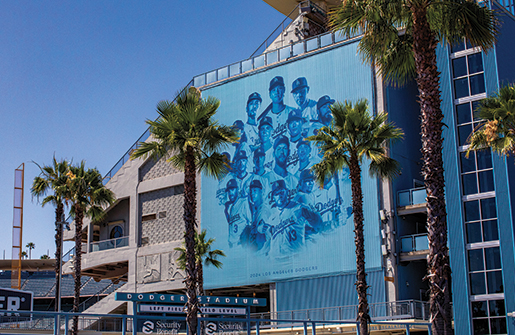
In his time serving between the church and the baseball field, Brandon has observed a uniqueness within the two ministries. “As pastors, we have a responsibility and accountability to shepherd the flock, to usher them along in their spiritual journey; in Hebrews, it talks about how we’re literally soul watchers. As a chaplain, I don’t have that same responsibility until a player gives it to me and asks me to speak into their life. To me, rather than shepherding, it’s more about standing at the front door and trying to welcome them in.”
This difference he names is one of the main things he’s had to work through over the years. “Being a chaplain is more about trying to build relationships with people who are believers and people who aren’t and just trying to be there for them all. Once I got that straight in my head, the tension eased a bit.”
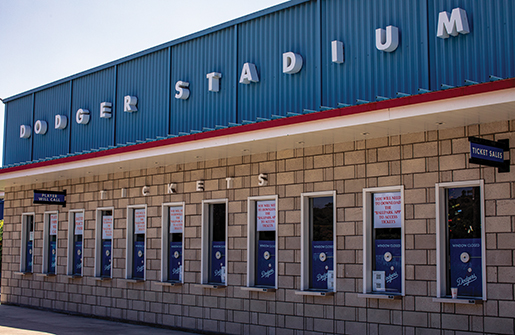
In a regular MLB season, there are 162 games—81 at home and 81 away—played over the course of six months. Once a week at Dodger Stadium, Brandon provides a chapel service that’s completely optional for the home team, the visiting team, and the umpires. Batting practice prioritizes the home team, so he typically heads to the visiting side first and does a service with them before the Dodgers. Once that service ends, he walks to the umpires’ locker room and asks if they’d like a chapel service, quick word, or prayer. Beyond his game-day rhythms, Brandon’s ministry is largely through one-on-one relationships and conversations with team members over coffee or breakfast. “Some years I have five or six guys that are really trying to grow in their relationship with Christ. So, we’ll have an interactive Bible study during the week in addition to the chapel services. The vast majority of meaningful ministry happens in our conversations together.”
In over 14 years, he has earned the trust of even those he calls “the upstairs people,” like the team’s general manager and president. “My first manager was a guy named Don Mattingly, then Dave Roberts, who’s also a believer, took over in 2016. The whole Dodger organization has made me feel welcome and a part of the team.” He’s seen his relationships grow with the personnel and players who have been there over the years, witnessing what he calls “individual triumphs,” whether it’s leading someone to Christ or performing a wedding for one of the players or even celebrating a 10-year anniversary. When new players see his relationships with the staff, coaches, and returning players, “that opens doors to build relationships with the new players.” Though one of the hardest things to deal with, he says, is building friendships and relationships with players only for them to get traded.
“There was one player that came to the Lord through chapel,” he recounts. “About a month later, I was on a road trip with the team and starting to build a relationship with this player. After a game, the two of us stayed up until 1:00 am; he told me about his upbringing and shared more of his story. After we returned to our hotel rooms, about 30 minutes later, I got a text from him that the general manager had just called to tell him that he was going to be traded. He was on a flight in the morning to a different team.”
Contracts can allow for players to be traded within 48 to 72 hours; players he’s built relationships with can suddenly be on a plane to play across the country or even overseas. Though much of it is out of his control, for Brandon, whether he’s with a player for a short period of time or several years, his aim is to faithfully be who God is calling him to be. “I don’t have a say in what players stay or who I’m handed. But God’s going to weave everything together the way he wants to, and I don’t think there’s anything more stabilizing for our soul than to trust in the sovereignty of God. This is the Lord’s ministry. I’m just representing him and the results aren’t on me.”
In his own life, he’s witnessed the impact of relationship and presence, both in a long-term setting and in a fleeting moment.
The best experience he had at Fuller, he shares, was finding a mentor and advisor who would become a fixture in his life. When he was discerning where to obtain his PhD as a lover of the Old Testament, Brandon met with potential advisors at various local schools and had negative experiences. He was at an academic conference when he came across a Baker Academic commentary by John Goldingay. Surprised to read on the back cover that this preeminent evangelical Old Testament scholar was not in England but currently teaching at Fuller, Brandon immediately emailed to ask if he was taking on new students. He was waiting outside John’s office at Fuller to meet him for the first time when he saw a guy come up the stairs with a book bag and a bubbly, welcoming personality. “John was wearing Tevas with socks, shorts, and a t-shirt. I walked into his office and was expecting it to look like most academic offices with academic books on the shelves and tables. His table had three issues of Rolling Stone magazine. I loved that first meeting.”
Brandon continued to learn much from John Goldingay, from a broader view of scholarship to being a faithfully committed husband and person of humility. “Even when I was working on my dissertation, I remember struggling, thinking, ‘I can’t write like other scholars.’ And John, without missing a beat said, ‘That’s okay, Brandon. They can’t write like you.’” To this day, the two continue their friendship. “I’m most grateful for John Goldingay, for his influence in my life, not just academically but as a Christian man. His mentorship went way beyond what I got in the classroom.”
Brandon emphasizes again how “awesome it is to be around anybody good at their craft,” getting to discern what work the Holy Spirit is doing and “just getting on board with that.” Recently, he was reminded of this while at the hospital with his wife who unexpectedly had to undergo an emergency surgery. The morning after, they were in the hospital room when the hospital chaplain came in to visit with the patient on the other side of the curtain. They overheard how the patient was wary of engaging. “The woman said, ‘I don’t have any religious faith.’ And the way the chaplain proceeded from that point was so good. She just listened to the woman share her story, her family trauma, and the history of hurt in her life. The chaplain just listened, asked questions, and then asked if she could pray for the woman and she said yes. When the chaplain left, I had to get up and tell her what an awesome job she had done.” After, Brandon and his wife overheard the woman call her son and tell him about what had happened and how the chaplain had prayed for her. “I thought about how that chaplain is never going to know that the woman had that conversation with her son. But God is using that chaplain in a way that she’s probably never going to know. Maybe one day that woman will open up to the Lord and look back to that conversation, I don’t know. But we don’t have to close the deal. God does.”
For Brandon, the blessing of what he gets to do as a chaplain is to be with people over many seasons, whether he can see the influence he’s had or not. “It’s easy for chaplains to get discouraged since you aren’t often with somebody long enough to see the results and know the impact you’re having. But we shouldn’t ever underestimate what God can do through even one conversation.”
Even in one conversation with Brandon, I would say he’s batting a thousand.
Recounting her time as a jail chaplain, Ashley Abercrombie reflects on God’s immeasurable love and grace and on our call to extend such love and grace to others.