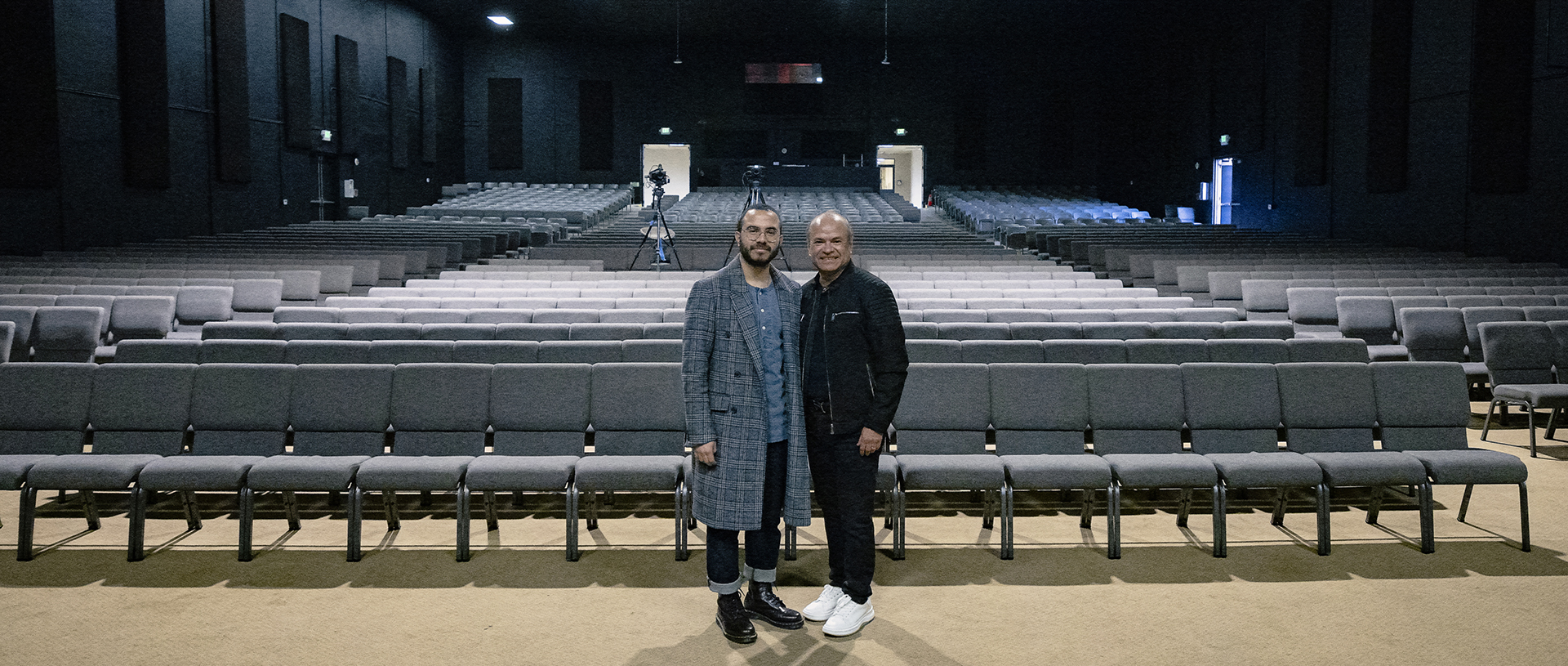

Restauración Los Angeles (RLA), a church in LA’s West Adams neighborhood, where René Molina Sr. (MDiv ’14) works as senior pastor alongside his son and executive director, René Molina Jr. (MATM ’20), describes its vision and mission this way: “Honrar a Dios, compartir el mensaje de esperanza y servir de una manera holística,” or, “honor God, share the message of hope and serve holistically.” The church was founded in 1986 by René Sr. and his wife, Hanelory, yet serving holistically was not always a part of RLA’s reality—even though doing so was always a part of both René Sr. and René Jr.’s hopes. Two observers after God’s heart, their dreams continue to unfold and flourish today because they gave themselves permission to welcome movement and change when a season has called for it.

Alma Lizzette Cárdenas-Rodríguez is a program manager and academic advisor at Fuller Seminary.
Nate Harrison is creative director of film and photography at FULLER studio. Find more of his work at NateCHarrison.com.
Restauración Los Angeles (RLA), a church in LA’s West Adams neighborhood, where René Molina Sr. (MDiv ’14) works as senior pastor alongside his son and executive director, René Molina Jr. (MATM ’20), describes its vision and mission this way: “Honrar a Dios, compartir el mensaje de esperanza y servir de una manera holística,” or, “honor God, share the message of hope and serve holistically.” The church was founded in 1986 by René Sr. and his wife, Hanelory, yet serving holistically was not always a part of RLA’s reality—even though doing so was always a part of both René Sr. and René Jr.’s hopes. Two observers after God’s heart, their dreams continue to unfold and flourish today because they gave themselves permission to welcome movement and change when a season has called for it.
Alma Lizzette Cárdenas-Rodríguez is a program manager and academic advisor at Fuller Seminary.
Nate Harrison is creative director of film and photography at FULLER studio. Find more of his work at NateCHarrison.com.
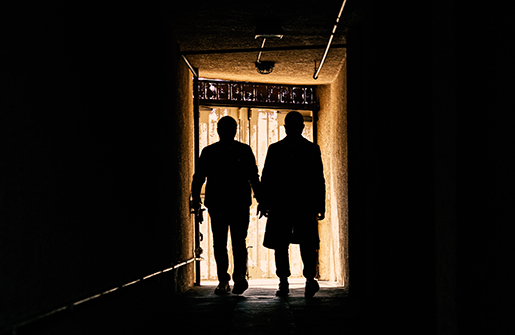
René Sr., born and raised in El Salvador, grew up in a dysfunctional family and lived through the 12-year civil war between 1979 and 1992, when it became an everyday occurrence to see dead bodies strewn about. He yearned to “salir adelante” or “get ahead,” and he used to dream of becoming an architect. “Walking through the streets of la capital and seeing the tall historical buildings sparked curiosity in me,” he says. He was 17 years old and in his first semester of an architecture program when he learned about Christ, and a newfound dream of helping guide and lead people sprouted.
Circumstances brought on by the civil war cut his program short, and at 21 years old, he made the difficult decision to migrate undocumented to the United States, describing the journey from El Salvador to Los Angeles as “uno se juega la vida.” Despite the challenging circumstances common to so many like him, René Sr. felt encouraged to move forward, in part, by the strength and voices of three women. With a knot in his throat, he tells about their impact. First was Margarita, his grandma, who instilled in him from a young age “a no darse por vencida” or “to never give up.” Second was his mother, Marta, or la hna. Martita, who taught him to “not give in to poverty and limitations” or “a no rendirse ante la pobreza y limitacion.” Lastly, his first-grade teacher, la Sra. Diaz, “su passion era de enseñarnos como que fueramos hijos e hijas de millonarios,” or “whose passion was to teach us as if we were sons and daughters of millionaires even though we were poor.”
As for René Molina Jr., his dream growing up was to be both a soccer player and a doctor—because, like his father, he “wanted to help people.” At some point, however, being in the church environment that his dad planted sparked a desire: “I wanted to help our church be healthy, effective, virtuous, impactful, and sustainable.” Born on Fountain and Vermont, raised and living in Los Angeles, and sitting in the pews of his parents’ church, René Jr. has always admired the “spiritual fervor” of the immigrant generation but also observed gaps and inefficiencies that hindered RLA from becoming what God desired it to be. He mentions how it was normal for his parents’ generation to go through life without addressing certain things—like their migration stories or the realities of the undocumented community. But he goes on to say how his generation has helped act as a mirror that reveals the ways this norm may not ultimately be healthy or helpful. His generation reveals truths to the generation that came before them and has served as an interruption to normal rhythms, inviting the community to sit with important realities, such as the ones they’ve endured on their journeys from their countries to the US. Those observations, together with his curiosity about church, societal impact, and justice, inspired him to move in the direction of theological studies and obtain his second master’s and PhD in organizational psychology, researching fair leadership.
René Jr. looked up to his parents when he was growing up. He describes his father, René Sr., as always being prepared: “My dad’s stamina, his always having an extra gear, inspired me.” René Jr.’s mom, Hanelory, had the “heart of Mother Teresa,” he says. “If she could give everything to everyone, she would.” Her faith, tenacity, tenderness, and affection marked him. He laughs as he states, “In many ways I am becoming my parents.”
René Jr. explains that the story of RLA’s before and after can be seen through Hanelory’s own story. René Jr. says that before RLA welcomed this long season of movement, loss, and change in mindset, theology, and practice, the church’s membership was 5,000-strong with over 40 people on staff. René Jr. calls this “the traditional era.” Then, women, including his mother, who had long been in the shadows, began to share their voices and step into the fullness of leadership.
For many years, René Sr. says, RLA had been faithful to a denomination from El Salvador, whose teaching imposed structures and rules that needed to be abided by. But when René Sr. recognized that RLA was not serving a community in El Salvador but one in Los Angeles, he knew that many things needed to change—including where they stood on women in leadership and ministry. René Sr. felt and saw how the teachings and rules they had in place were running people over instead of helping them become what God had called the church to be. The voice of the Spirit kept pointing René Sr. to the idea of legacy, asking him, “De que generation quieres ser pastor, ¿la presente o la futura? What generation do you want to pastor, the present or future?” He responded, “Both.” And that is when the Spirit said, “You can’t pastor a generation you do not understand. Are you willing to learn from them?” René Sr. shares that his willingness to move in a
different direction came at the expense of denominational support and the
loss of over half of the congregantsand personnel.
But, the gift is looking back after 15 years and recognizing that it has been worth it.
René Sr. looks back at all the people who believed and affirmed his direction and choices during that season of change and remembers, in particular, many from the Fuller community. Because he was a student at Fuller Seminary in the thick of this, he mentions the prayer garden and the courses of Dr. Juan Martínez and Cathy Barsotti’s courses as safe spaces and affirming voices during his MDiv studies. And now, as a result of their changes, René Jr. says that RLA is a healthier and holistic community, and he gets to see his mother step into the fullness of her voice and into public leadership along with other women in ways not possible before. They have been able to be salt in the community more effectively, René Sr. describes. Now, he shares, his own grandaughter’s dream is to contribute to and work at the church where she grew up—a redemptive dream for generations of women in the greater community who have experienced trauma and silencing.
While René Sr. did not become an architect of buildings, he has used his gifts, studies, and leadership, to build a church that seeks the shalom of the community, in such a way that they are getting ready to break ground on their three-acre property to create about 250 units of affordable housing and scale up their work and impact—building what will serve as inspiration for younger and future generations to draw their own expressions. (Part of the housing project is a vision and dream inspired by Marcela Palos, René Sr. and Hanelory’s daughter, who directs their two-year-old CDC, which currently serves the community with over 20 programs alongside other partners.) And while René Jr. did not become a doctor, he now embodies the role of a physician who seeks to cure the moral or spiritual ills of the soul and body of the church through his gifts, research, and leadership.
Alexia Salvatierra, academic dean for Centro Latino and associate professor of mission and global transformation, shares the central values of Centro Latino and its unique impact on shaping leaders for the Latino/a church.