Illustration by Charity Ellis
Wendy Cadge is the cofounder of the Chaplaincy Innovation Lab (CIL). She is a sociologist and the author of three books, Spiritual Care: The Everyday Work of Chaplains, Paging God: Religion in the Halls of Medicine, and Heartwood: The First Generation of Theravada Buddhism in America.
Mary Glenn: Can you please share about the Chaplaincy Innovation Lab, including its beginning?
Wendy Cadge: The Chaplaincy Innovation Lab was born in 2018 while I was doing research for a book called Spiritual Care: The Everyday Work of Chaplains. I was interviewing the directors of professional chaplaincy organizations across the country, including professional groups of airport chaplains, seaport chaplains, military chaplains, and so on. They were facing some of the same challenges, but they didn’t know each other and didn’t have a sense of all of the places where chaplaincy existed. We launched the Lab to bring these practitioners into dialogue with scholars and educators across the country.
I received a small grant from a foundation in New Jersey—which has since ceased operation—called FISH. After meeting at a conference for our work with port chaplains, Michael Skaggs and I designed and built a website that was the start of the Lab. Our goal was to pitch a big tent and help people who were teaching, researching, and working in chaplaincy across a range of settings connect and learn together. The website launched in October 2018; in December 2019, we had our first in-person meeting hosted by The Fetzer Institute. It was a momentous occasion because, for the first time, 25 leaders thinking about chaplaincy and spiritual care across all sectors of this work were able to gather and have an open, wide-ranging conversation about the vision and dream for the future.
My book, Spiritual Care: The Everyday Work of Chaplains, provides the intellectual framework for the Lab. It focuses on Boston as a case study to ask, “How do chaplains and spiritual care providers fit into American religious ecology?” Scholars often talk about American religious life and history in terms of congregations; the Chaplaincy Innovation Lab’s work has shown that chaplains—who have a long history alongside congregations—are a long-overlooked, but critical, component of the history of spirituality and religion in the US. I hope our work will encourage people to think about the American religious landscape in a different way and to consider religious leaders whose voices have not always been represented as part of that story.
MG: I’m curious to know why spiritual care was so important to you as a sociologist. Was it part of your initial research when you became a sociologist?
WC: I attended Swarthmore College outside of Philadelphia, and then I went to Sri Lanka to live for a year on a Fulbright IIE Fellowship while in a PhD program in sociology at Princeton University. When I returned to the US, I knew that I wanted to study some aspect of American religious life in graduate school. There was a Buddhist temple not far from Philadelphia where I was living, and one of my undergraduate advisors connected me. The mostly Thai immigrants at the temple gave me permission to write about them. The dissertation developed into my first book, Heartwood: The First Generation of Theravada Buddhism in America. At the end of that research, the Thai Buddhist monk from the temple where I had done my research became ill. Near the end of his life, he was admitted to a local hospital and I was invited to visit him. I wondered how the hospital would care for him as a monk, which led me to think more broadly about whether and how spirituality and religion are important for many in healthcare—patients, staff, family members, and others.
A two-year postdoctoral fellowship from the Robert Wood Johnson Scholars in Health Policy Research Program allowed me to complete the research for a project about religion, spirituality, and medicine that led to my book, Paging God: Religion in the Halls of Medicine. While I was writing the book, I was curious about chaplains outside of healthcare settings. I eventually met and interviewed chaplains in Boston across a range of settings, which led to Spiritual Care: The Everyday Work of Chaplains. I didn’t set out to study spiritual care. I was interested in people’s everyday religious lives and what made them tick. I was attracted to chaplaincy and spiritual care because I like to study things that people don’t usually notice—the more invisible. Photographer Randall Armor and I also did a project about Boston’s hidden sacred spaces in chapels and meditation and prayer rooms outside of congregations in Greater Boston.1
Jaclyn Williams: What do you think the demand for chaplains in all of these multiple sectors signifies about spirituality, particularly in the US?
WC: This is a tricky question. The Lab did a national survey of the American public in collaboration with Gallup in 2022 showing pretty clearly that most Americans do not know what a chaplain is. We defined “chaplain” as a religious professional that you meet outside of a congregation, like in the military or in health care. About 44 percent of the people we surveyed told us they had contact with a chaplain. Of these 44 percent, the largest group reported met a chaplain at a place of worship. When we interviewed them, we discovered they were talking about their local clergyperson so a lot of confusion remains.
These interviews suggest that many people have deep spiritual connections and engage with a range of people around them. My colleague Amy Lawton and I argue that the data show spirituality to be an important and consistent aspect of many people’s experiences in the United States. But to address that confusion about terminology, it’s important to acknowledge how the language of “chaplain” and “spiritual care” is heard. Some people hear the word “chaplain” and think about Father Mulcahy from M*A*S*H. Others hear the word more broadly, without defaulting to a white, male clergyperson in a collar. We’ve developed a vision out of our work together that describes these various approaches and a vision for the future where spiritual care is understood much more capaciously. 2

Mary Glenn is assistant professor of the practice of chaplaincy and community development.

Jaclyn Williams is assistant professor of the practice of preaching and chaplaincy.
Wendy Cadge is the cofounder of the Chaplaincy Innovation Lab (CIL). She is a sociologist and the author of three books, Spiritual Care: The Everyday Work of Chaplains, Paging God: Religion in the Halls of Medicine, and Heartwood: The First Generation of Theravada Buddhism in America.
Mary Glenn: Can you please share about the Chaplaincy Innovation Lab, including its beginning?
Wendy Cadge: The Chaplaincy Innovation Lab was born in 2018 while I was doing research for a book called Spiritual Care: The Everyday Work of Chaplains. I was interviewing the directors of professional chaplaincy organizations across the country, including professional groups of airport chaplains, seaport chaplains, military chaplains, and so on. They were facing some of the same challenges, but they didn’t know each other and didn’t have a sense of all of the places where chaplaincy existed. We launched the Lab to bring these practitioners into dialogue with scholars and educators across the country.
I received a small grant from a foundation in New Jersey—which has since ceased operation—called FISH. After meeting at a conference for our work with port chaplains, Michael Skaggs and I designed and built a website that was the start of the Lab. Our goal was to pitch a big tent and help people who were teaching, researching, and working in chaplaincy across a range of settings connect and learn together. The website launched in October 2018; in December 2019, we had our first in-person meeting hosted by The Fetzer Institute. It was a momentous occasion because, for the first time, 25 leaders thinking about chaplaincy and spiritual care across all sectors of this work were able to gather and have an open, wide-ranging conversation about the vision and dream for the future.
My book, Spiritual Care: The Everyday Work of Chaplains, provides the intellectual framework for the Lab. It focuses on Boston as a case study to ask, “How do chaplains and spiritual care providers fit into American religious ecology?” Scholars often talk about American religious life and history in terms of congregations; the Chaplaincy Innovation Lab’s work has shown that chaplains—who have a long history alongside congregations—are a long-overlooked, but critical, component of the history of spirituality and religion in the US. I hope our work will encourage people to think about the American religious landscape in a different way and to consider religious leaders whose voices have not always been represented as part of that story.
MG: I’m curious to know why spiritual care was so important to you as a sociologist. Was it part of your initial research when you became a sociologist?
WC: I attended Swarthmore College outside of Philadelphia, and then I went to Sri Lanka to live for a year on a Fulbright IIE Fellowship while in a PhD program in sociology at Princeton University. When I returned to the US, I knew that I wanted to study some aspect of American religious life in graduate school. There was a Buddhist temple not far from Philadelphia where I was living, and one of my undergraduate advisors connected me. The mostly Thai immigrants at the temple gave me permission to write about them. The dissertation developed into my first book, Heartwood: The First Generation of Theravada Buddhism in America. At the end of that research, the Thai Buddhist monk from the temple where I had done my research became ill. Near the end of his life, he was admitted to a local hospital and I was invited to visit him. I wondered how the hospital would care for him as a monk, which led me to think more broadly about whether and how spirituality and religion are important for many in healthcare—patients, staff, family members, and others.
A two-year postdoctoral fellowship from the Robert Wood Johnson Scholars in Health Policy Research Program allowed me to complete the research for a project about religion, spirituality, and medicine that led to my book, Paging God: Religion in the Halls of Medicine. While I was writing the book, I was curious about chaplains outside of healthcare settings. I eventually met and interviewed chaplains in Boston across a range of settings, which led to Spiritual Care: The Everyday Work of Chaplains. I didn’t set out to study spiritual care. I was interested in people’s everyday religious lives and what made them tick. I was attracted to chaplaincy and spiritual care because I like to study things that people don’t usually notice—the more invisible. Photographer Randall Armor and I also did a project about Boston’s hidden sacred spaces in chapels and meditation and prayer rooms outside of congregations in Greater Boston.1
Jaclyn Williams: What do you think the demand for chaplains in all of these multiple sectors signifies about spirituality, particularly in the US?
WC: This is a tricky question. The Lab did a national survey of the American public in collaboration with Gallup in 2022 showing pretty clearly that most Americans do not know what a chaplain is. We defined “chaplain” as a religious professional that you meet outside of a congregation, like in the military or in health care. About 44 percent of the people we surveyed told us they had contact with a chaplain. Of these 44 percent, the largest group reported met a chaplain at a place of worship. When we interviewed them, we discovered they were talking about their local clergyperson so a lot of confusion remains.
These interviews suggest that many people have deep spiritual connections and engage with a range of people around them. My colleague Amy Lawton and I argue that the data show spirituality to be an important and consistent aspect of many people’s experiences in the United States. But to address that confusion about terminology, it’s important to acknowledge how the language of “chaplain” and “spiritual care” is heard. Some people hear the word “chaplain” and think about Father Mulcahy from M*A*S*H. Others hear the word more broadly, without defaulting to a white, male clergyperson in a collar. We’ve developed a vision out of our work together that describes these various approaches and a vision for the future where spiritual care is understood much more capaciously. 2
Mary Glenn is assistant professor of the practice of chaplaincy and community development.
Jaclyn Williams is assistant professor of the practice of preaching and chaplaincy.
JW: I appreciate that. Speaking from experience, a third area of benefit is being able to share with those structures and institutions within chaplains’ work to say, “This is why you want chaplains here.” If we can help them understand there’s a demand, even amidst the difficulty of naming it, then more institutions will say, “Oh, okay.”
WC: In today’s changing spiritual infrastructures, it is helpful to be aware of the different labels people put on their approaches to issues of meaning and purpose. Fewer people are attending what we might call “traditional” congregations, and many don’t seek out chaplains because they don’t think of their experiences in those categories or boxes. The label or container through which they are engaging questions of meaning and purpose is different and they are asking what it means to engage in a different way. This is part of the work we are doing in a new research project about spiritual innovation.3
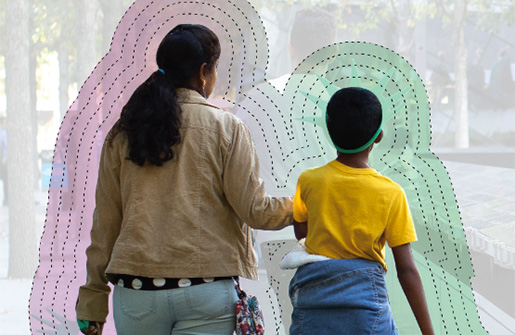
MG: More than the training, it’s also an intuitive ability to read the room, read the people, and then do the work yourself to make sure you are being self-aware. “How am I navigating these complex conversations where people are not all the same, not all speaking the same language, and not all having the same needs?” Being intuitive and empathetic is really key.
JW: Attunement is something I talk to my students about, including relying on some of their social human skills of knowing how to tune in. As chaplains, we get to dig deep into attunement and utilize those skills. If we start there and are curious learners as chaplains, rather than coming in with the answers, we can listen to the language in a different kind of way, which is so beneficial.
MG: Are there any other areas of research within chaplaincy that you’re currently hoping to engage with and examine?
WC: With leadership from Amy Lawton, a sociologist and the Lab’s research manager, we’re looking at the experiences of chaplains who do not identify with a religious tradition, meaning chaplains who identify as humanist, agnostic, atheist, and so on. We’re gathering resources and trying to understand what their experiences are because that’s a quickly growing segment of the chaplain population. Similar to the conversation circles the Lab has done with chaplains of color, we’re doing that research for chaplains who are not affiliated. We just published a working paper on this.4
MG: As we talk about all these opportunities, what are you most hopeful for in the sphere of chaplaincy? What gives you hope?
WC: Research shows that chaplaincy and spiritual care when done well—which is not always the case—can have a deep positive impact. I’m hopeful that spiritual care providers will continue to do their work based on the research in ways that meaningfully support people at delicate life moments.
Angela Song, palliative care chaplain, reflects on the tender work of walking with patients through their most difficult seasons.