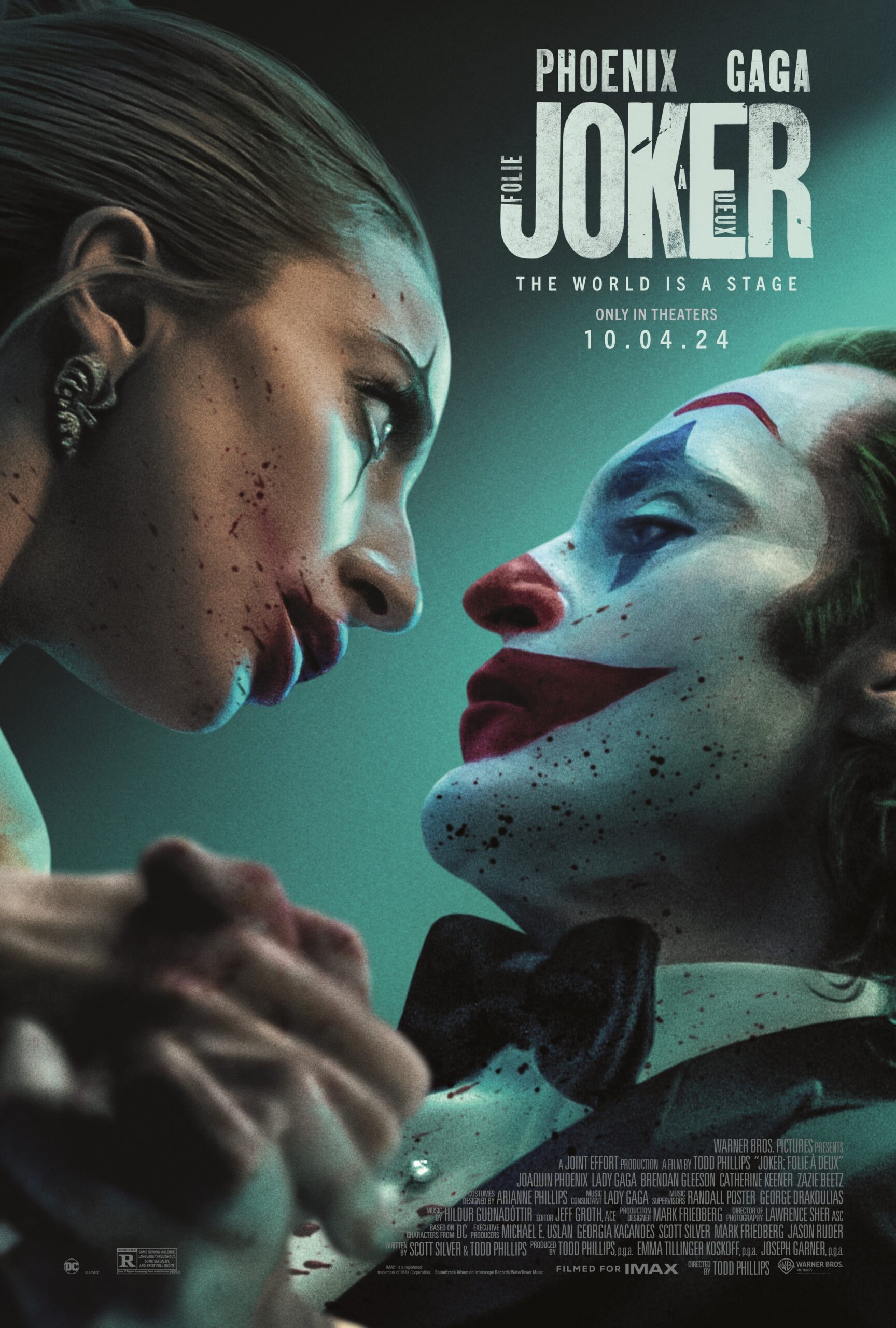

I have never seen a film exhibit such contempt for its audience as Joker: Folie à Deux. You have to see it to believe it.
No, really. If you can stomach it, you should see it as an exercise in bearing with a presence that has contempt for you. Movies are a relatively “safe” way to interact with difficult emotions—most of us enjoy a good horror movie, right?—and we don’t often have the opportunity to experience contempt (thankfully). If you’re wary of spending your time and money to be derided in a theater, wait for Joker: Folie à Deux to become available on streaming services. Given how poorly the film has been received (justifiably), that shouldn’t take long.
The movie isn’t entirely without merit. Joaquin Phoenix and Lady Gaga are giving it their all. Phoenix appears to be trying to imbue Arthur Fleck with pathos. Gaga is mis-served by the film’s construction; it feels like there are scenes missing that would have enriched her character. But she is believable in every moment. The song and dance numbers are novel for a comic book movie. They are simple. The film doesn’t do itself any favors by referencing great musicals within the world of the film. But Phoenix and Gaga lean into the song and dance scenes with gusto.
Ultimately this is a movie for no one. Comic book fans are going to be put off by the movie’s belligerent insistence that people who enjoyed the first Joker movie were bad people who liked a bad movie. Yes, really – the movie strongly implies that Joker was a made-for-TV movie within the world of Joker: Folie à Deux about Arthur Fleck’s many murders. It’s still suggested in a way that would give the filmmakers deniability that this is what they mean—”No, we’re talking about a different movie we never show you!”—but this escape hatch feels like a lying child carefully avoiding culpability.
Joker: Folie à Deux is also a musical, right? I guess it’s mostly in the vein of a Bob Fosse musical (Cabaret, All that Jazz). But the staging, production design, and choreography of Joker: Folie à Deux’s musical numbers aren’t particularly interesting. Other than Phoenix’s earnestness, the musical numbers are just boring. The film even nods to Looney Tunes. Some of Looney Tunes’ most famous cartoons are madcap musicals, but there is zero zaniness in Joker: Folie à Deux. I’m still not sure why the film worked such an elaborate reference to Looney Tunes into its structure. Was that the movie that people in the movie are referring to when they talk about the made-for-TV movie about Arthur Fleck’s crimes?
Martin Scorsese, notably, had an Executive Producer credit on Joker. Reportedly, Scorsese’s production company helped the first film with finding shooting locations. Plus, Joker was such an obvious Scorsese-homage, having Scorsese’s name on the film—someone who is famously indifferent toward superhero movies—likely helped with the film’s marketing and headed off some aspersions of mere pastiche.
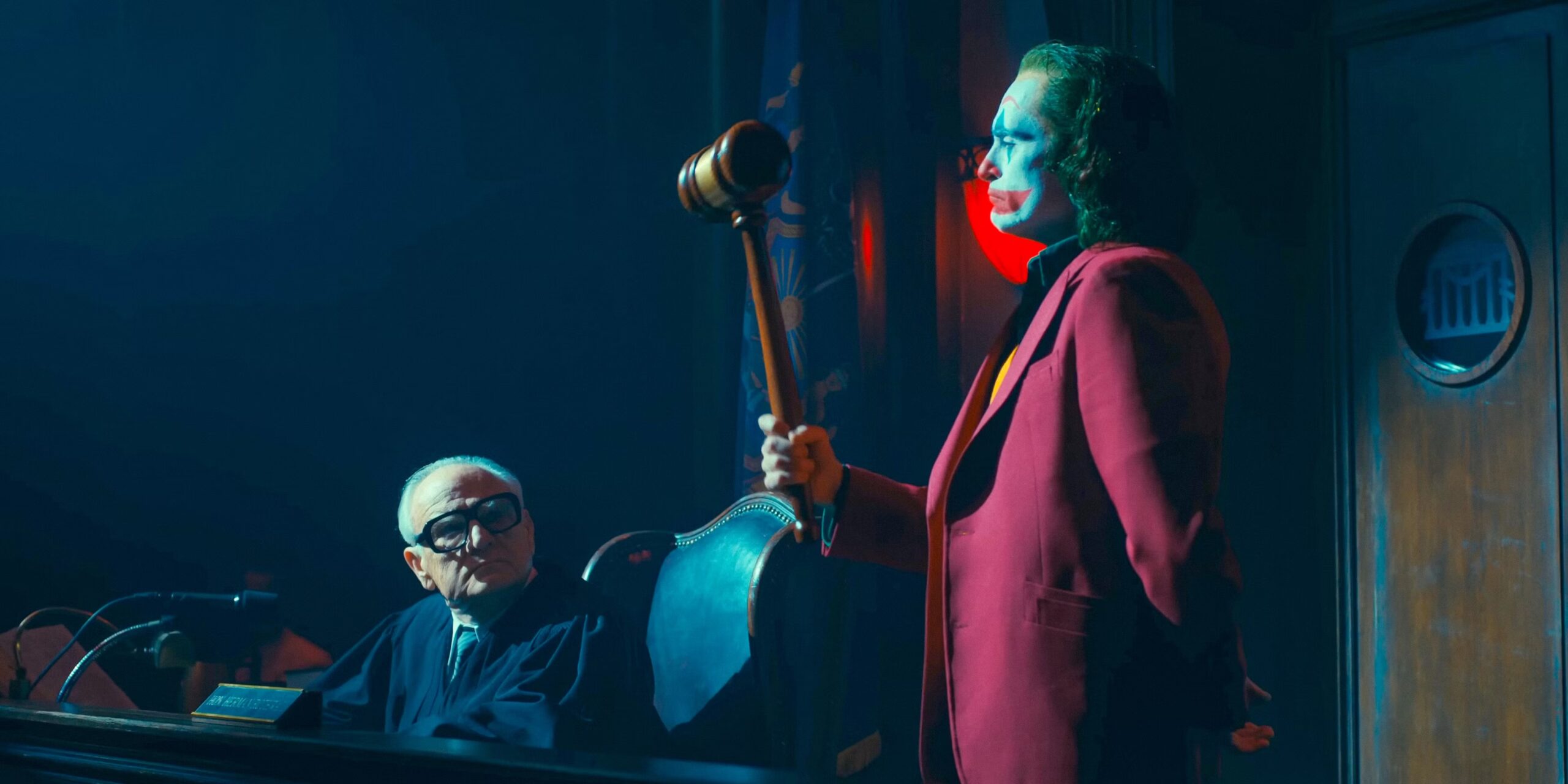
Joker: Folie à Deux includes a character styled to look like Martin Scorsese. He is the judge in Arthur’s trial (Arthur’s trial provides the narrative spine of the film). It’s not difficult to imagine they offered the role to Scorsese, who turned it down given the role itself, the quality of the film, and his general indifference toward the genre. In a fantasy sequence the character styled to look like Martin Scorsese is brutally murdered by the Joker. It’s ugly.
So it’s not a movie for the art house movie crowd either. It’s not for anyone. And the overall insistence of the film is that the world is a dirty, ugly place without love in it, and the world is particularly harsh on people with mental illness, like Arthur Fleck. And there is no escape for people like him, or for any of us, from the awfulness of life. Ulgh. Sad.
At best, Joker: Folie à Deux wants the audience to feel bad because it feels bad, which I suppose is some kind of cry for help, but it’s a cry for help so flooded with belligerence it’s difficult to hear it. Like I said, watching Joker: Folie à Deux is good practice for emotionally navigating your way through an encounter like this. There are people who express their own need for love this way. It is the Christian task to love them through that maelstrom of self-hatred. To be clear, I see no need to love this movie like that, but sitting with and feeling that self-hatred directed at you by a movie is not wasted time if you want to be better at loving others going through similar circumstances. In other words, we need to be the kinds of people Joker: Folie à Deux doesn’t believe exists. Prove it wrong.
I have never seen a film exhibit such contempt for its audience as Joker: Folie à Deux. You have to see it to believe it.
No, really. If you can stomach it, you should see it as an exercise in bearing with a presence that has contempt for you. Movies are a relatively “safe” way to interact with difficult emotions—most of us enjoy a good horror movie, right?—and we don’t often have the opportunity to experience contempt (thankfully). If you’re wary of spending your time and money to be derided in a theater, wait for Joker: Folie à Deux to become available on streaming services. Given how poorly the film has been received (justifiably), that shouldn’t take long.
The movie isn’t entirely without merit. Joaquin Phoenix and Lady Gaga are giving it their all. Phoenix appears to be trying to imbue Arthur Fleck with pathos. Gaga is mis-served by the film’s construction; it feels like there are scenes missing that would have enriched her character. But she is believable in every moment. The song and dance numbers are novel for a comic book movie. They are simple. The film doesn’t do itself any favors by referencing great musicals within the world of the film. But Phoenix and Gaga lean into the song and dance scenes with gusto.
Ultimately this is a movie for no one. Comic book fans are going to be put off by the movie’s belligerent insistence that people who enjoyed the first Joker movie were bad people who liked a bad movie. Yes, really – the movie strongly implies that Joker was a made-for-TV movie within the world of Joker: Folie à Deux about Arthur Fleck’s many murders. It’s still suggested in a way that would give the filmmakers deniability that this is what they mean—”No, we’re talking about a different movie we never show you!”—but this escape hatch feels like a lying child carefully avoiding culpability.
Joker: Folie à Deux is also a musical, right? I guess it’s mostly in the vein of a Bob Fosse musical (Cabaret, All that Jazz). But the staging, production design, and choreography of Joker: Folie à Deux’s musical numbers aren’t particularly interesting. Other than Phoenix’s earnestness, the musical numbers are just boring. The film even nods to Looney Tunes. Some of Looney Tunes’ most famous cartoons are madcap musicals, but there is zero zaniness in Joker: Folie à Deux. I’m still not sure why the film worked such an elaborate reference to Looney Tunes into its structure. Was that the movie that people in the movie are referring to when they talk about the made-for-TV movie about Arthur Fleck’s crimes?
Martin Scorsese, notably, had an Executive Producer credit on Joker. Reportedly, Scorsese’s production company helped the first film with finding shooting locations. Plus, Joker was such an obvious Scorsese-homage, having Scorsese’s name on the film—someone who is famously indifferent toward superhero movies—likely helped with the film’s marketing and headed off some aspersions of mere pastiche.
Joker: Folie à Deux includes a character styled to look like Martin Scorsese. He is the judge in Arthur’s trial (Arthur’s trial provides the narrative spine of the film). It’s not difficult to imagine they offered the role to Scorsese, who turned it down given the role itself, the quality of the film, and his general indifference toward the genre. In a fantasy sequence the character styled to look like Martin Scorsese is brutally murdered by the Joker. It’s ugly.
So it’s not a movie for the art house movie crowd either. It’s not for anyone. And the overall insistence of the film is that the world is a dirty, ugly place without love in it, and the world is particularly harsh on people with mental illness, like Arthur Fleck. And there is no escape for people like him, or for any of us, from the awfulness of life. Ulgh. Sad.
At best, Joker: Folie à Deux wants the audience to feel bad because it feels bad, which I suppose is some kind of cry for help, but it’s a cry for help so flooded with belligerence it’s difficult to hear it. Like I said, watching Joker: Folie à Deux is good practice for emotionally navigating your way through an encounter like this. There are people who express their own need for love this way. It is the Christian task to love them through that maelstrom of self-hatred. To be clear, I see no need to love this movie like that, but sitting with and feeling that self-hatred directed at you by a movie is not wasted time if you want to be better at loving others going through similar circumstances. In other words, we need to be the kinds of people Joker: Folie à Deux doesn’t believe exists. Prove it wrong.

Elijah Davidson is Co-Director of Brehm Film and Senior Film Critic. Subscribe to Come & See, his weekly newsletter that guides you through the greatest films ever made, and find more of his work at elijahdavidson.com.