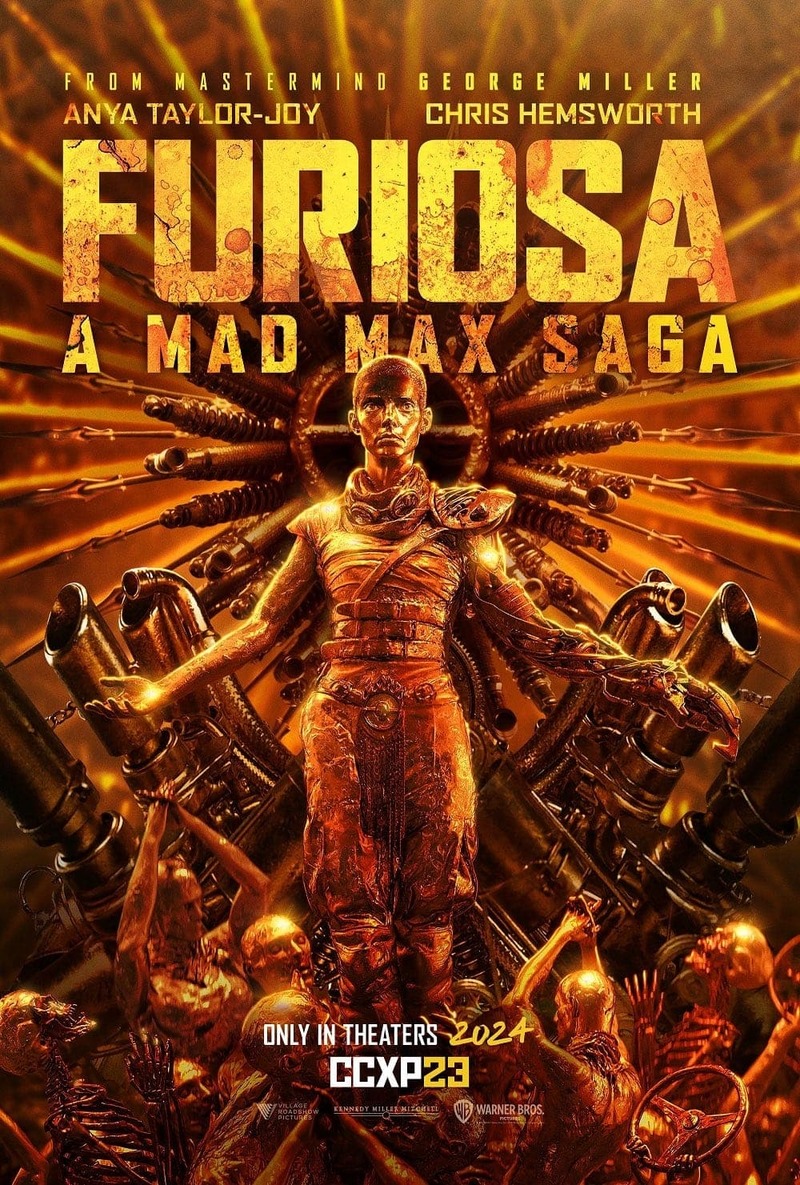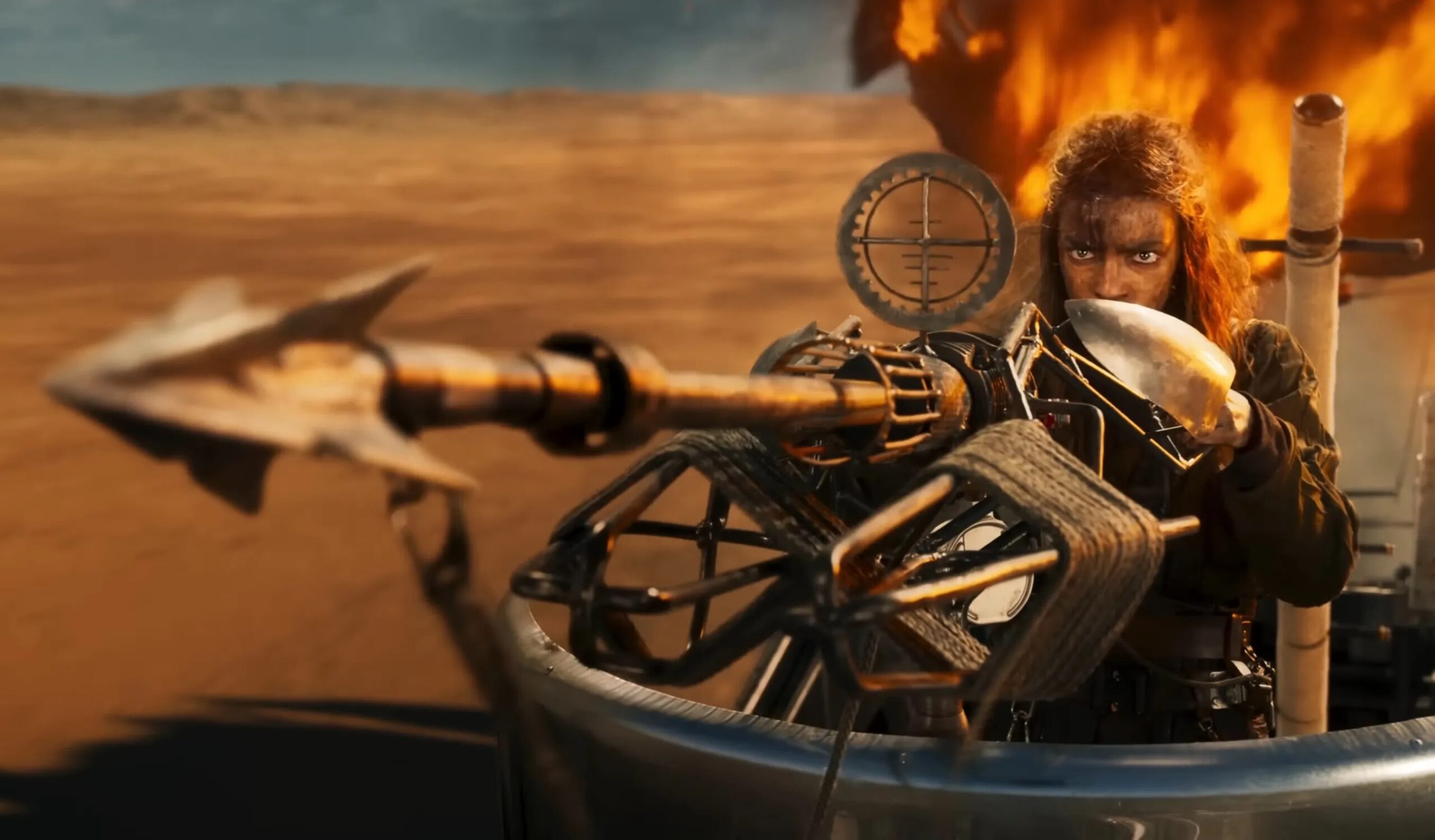

Furiosa: A Mad Max Saga leaves off where Mad Max: Fury Road begins. But where Fury Road is almost spartan in its narrative—“there and back again” with all haste; hints of backstory like the moon crashing into earth in the corner of your field of vision—Furiosa is epic. True to its title, it’s a saga in the literary sense.
Sagas are Scandinavian in origin, primarily Icelandic. They emerged during the early Middle Ages first as oral traditions and then a few hundred years later as written tales. Sagas are long poetic stories often covering generations of pre-Christianized peoples. They have clear protagonists who are are presented as heroes, and often multiple protagonists who provide moral and thematic contrast for one another. Sagas’ heroes’ actions are never only heroic. They fail ethically and direly as well as succeed.
Importantly, sagas chronicle a time of great change. They depict human exemplars of an era now past, the “best of the best” of life before… something (primarily Christianity as a religion and as a structural foundation for society). The exemplars lead the people into a new era. The heroes themselves rarely get to experience that new era. The story of Moses in Exodus, for example, is like a saga. We read about his whole life. He’s presented as both the best of the Hebrews and the best of the Egyptians. He leads the people into a new era, but he doesn’t get to enjoy that new era himself.
I’m betting George Miller would have preferred to title this film simply The Saga of Furiosa and to leave Max out of it, but for marketing purposes it was probably better to keep “Mad Max” in there somewhere. This is Furiosa’s story, she who was memorably played by Charlize Theron in Fury Road and is played here by Alyla Browne as a child* and then Anya Taylor-Joy as a young adult. Furiosa was born in a green place, the child of a tribe of women called the Vulvani. She’s taken to the Wasteland where she strives to enact revenge on those who took her, to protect the location of her verdant home, and to return to it. The Mad Max narrative world is a place of desperate need for water, food, gasoline, and bullets to procure said food, water, and gasoline. To achieve her ends Furiosa must become the best driver and fighter in the Wasteland.
Swinging back around (like a Gas Town Pole Cat) to Furiosa’s saga-ness, what kind of change is this story chronicling? The Icelandic sagas are not explicit about the change from pre-Christian to Christian society; they just depict the best of the best of the pre-Christian world and show why it couldn’t/shouldn’t continue. Furiosa: A Mad Max Saga and its coda, Mad Max: Fury Road, depict a world ruled by stereotypically masculine ideals – grease monkeyism, armed combat, and the distillation of life as the exploitation of available resources, people, especially women, included. Furiosa is the best “man” and the best woman. Like Moses in Pharaoh’s court, she has to preserve her birth identity like a secret treasure while rising in authority among her captors.
We argue over whether or not these two films can be considered “feminist.” In the context of only these Mad Max films, I guess they are, as they posit the ascendency of a world structured around stereotypically feminine ideals – violence employed only for protection, the mutual care of people for each other, and a sustainable stewardship of the natural environment.
These values are not inherently masculine or feminine, though they are typically framed as such in popular culture. The Mad Max films are rooted in the exploitation tradition, which relies on pop-culture shorthand to get quickly and forcefully to a story’s thematic meaning in support of the story’s more radical elements. Exploitation film are not nuanced, but they are bracing.
For me, Fury Road’s staging and spectacle are exhilarating while the film’s pace is ultimately numbing. Furiosa’s saga is more poetic, using of surprising visual symbolism and editing rhythms to make the film more dynamic. George Miller’s always mirthful action staging yet abounds. As one element among many it is more enjoyable. Vehicular mayhem is still the main course. It’s just not the only course in this post-apocalyptic feast. “Do you have it in you to make it epic?” Dementus (an almost unrecognizable, deliriously fun Chris Hemsworth) asks Furiosa in a key moment. She does, and George Miller does, just not in the way that Dementus or we expect. Our imaginations are too shaped by “masculine” ideals. Furiosa imagines something new.
That’s the end of the review for those of you who haven’t seen the film yet. If you have seen the film, go ahead and continue reading. Otherwise what I write below will SPOIL an important part of the film’s ending.
Okay. I warned you.
The something new that Furiosa imagines is symbolized by Dementus’ fate, and what a symbol it is! In context, a fruit tree propagated from a seed given to a girl by her mother from a woman-led place of abundance, growing deep in the heart of a man-dominated place (Immortan Joe’s Citadel) would be a potent enough symbol on its own. It would be a symbol of hope closely guarded and nurtured through countless years of trial.
But that’s not all the symbol is, is it? The tree is growing out of the genitals—as the genitals?—of the man principally responsible for destroying Furiosa’s life. His “masculinity,” the source of so much pain and death, has been transformed into something that gives life.
Remember, whatever broke the world in the Mad Max narrative has led to babies being born deformed. Water may be precious in this world, but fruitful genetic material is even more precious. Furiosa is from an unsullied tribe. The girls she rescues in Fury Road are “clean” breeding stock. And here, at the end, “beyond vengeance,” as the title card denotes this chapter in the film, Dementus’ “seed” has been replaced with an actual seed that bears good fruit. The shot is quick, but I think he’s happy about it.
Or maybe he’s just trapped there and horrified by what Furiosa did to him? Maybe Furiosa did something worse to him than killing him?
Like I said, the shot is quick, and the expressions of both terror and bliss look similar – wide eyes, tears, a mouth that is either laughing or screaming. Maybe those in power in the masculine-ruled world will have to go through something like horror before they will be able to experience the joy of a world ruled by more “feminine” ideals?
Either way, the symbol is one of new, abundant life growing out of the source of that which previously broke the world. Whew!
*The production uses obvious digital effects to “mask” aspects of Anya Taylor-Joy’s features onto Alyla Browne’s face. It’s primarily her eyes. It’s distracting and off-putting, and the only stumble in an otherwise glorious exhibition of filmmaking. Young Furiosa is a substantial part of this narrative. It’s a shame such a surreal digital effect is used throughout these sequences. You’d think filmmakers would know by now that the eyes are the most important part of a person’s face. When you mess with them, the character becomes inhuman and difficult to connect with. I wanted the character to go free, but I wanted them to keep that little weird-eyed digital child in a locked box.
Furiosa: A Mad Max Saga leaves off where Mad Max: Fury Road begins. But where Fury Road is almost spartan in its narrative—“there and back again” with all haste; hints of backstory like the moon crashing into earth in the corner of your field of vision—Furiosa is epic. True to its title, it’s a saga in the literary sense.
Sagas are Scandinavian in origin, primarily Icelandic. They emerged during the early Middle Ages first as oral traditions and then a few hundred years later as written tales. Sagas are long poetic stories often covering generations of pre-Christianized peoples. They have clear protagonists who are are presented as heroes, and often multiple protagonists who provide moral and thematic contrast for one another. Sagas’ heroes’ actions are never only heroic. They fail ethically and direly as well as succeed.
Importantly, sagas chronicle a time of great change. They depict human exemplars of an era now past, the “best of the best” of life before… something (primarily Christianity as a religion and as a structural foundation for society). The exemplars lead the people into a new era. The heroes themselves rarely get to experience that new era. The story of Moses in Exodus, for example, is like a saga. We read about his whole life. He’s presented as both the best of the Hebrews and the best of the Egyptians. He leads the people into a new era, but he doesn’t get to enjoy that new era himself.
I’m betting George Miller would have preferred to title this film simply The Saga of Furiosa and to leave Max out of it, but for marketing purposes it was probably better to keep “Mad Max” in there somewhere. This is Furiosa’s story, she who was memorably played by Charlize Theron in Fury Road and is played here by Alyla Browne as a child* and then Anya Taylor-Joy as a young adult. Furiosa was born in a green place, the child of a tribe of women called the Vulvani. She’s taken to the Wasteland where she strives to enact revenge on those who took her, to protect the location of her verdant home, and to return to it. The Mad Max narrative world is a place of desperate need for water, food, gasoline, and bullets to procure said food, water, and gasoline. To achieve her ends Furiosa must become the best driver and fighter in the Wasteland.
Swinging back around (like a Gas Town Pole Cat) to Furiosa’s saga-ness, what kind of change is this story chronicling? The Icelandic sagas are not explicit about the change from pre-Christian to Christian society; they just depict the best of the best of the pre-Christian world and show why it couldn’t/shouldn’t continue. Furiosa: A Mad Max Saga and its coda, Mad Max: Fury Road, depict a world ruled by stereotypically masculine ideals – grease monkeyism, armed combat, and the distillation of life as the exploitation of available resources, people, especially women, included. Furiosa is the best “man” and the best woman. Like Moses in Pharaoh’s court, she has to preserve her birth identity like a secret treasure while rising in authority among her captors.
We argue over whether or not these two films can be considered “feminist.” In the context of only these Mad Max films, I guess they are, as they posit the ascendency of a world structured around stereotypically feminine ideals – violence employed only for protection, the mutual care of people for each other, and a sustainable stewardship of the natural environment.
These values are not inherently masculine or feminine, though they are typically framed as such in popular culture. The Mad Max films are rooted in the exploitation tradition, which relies on pop-culture shorthand to get quickly and forcefully to a story’s thematic meaning in support of the story’s more radical elements. Exploitation film are not nuanced, but they are bracing.
For me, Fury Road’s staging and spectacle are exhilarating while the film’s pace is ultimately numbing. Furiosa’s saga is more poetic, using of surprising visual symbolism and editing rhythms to make the film more dynamic. George Miller’s always mirthful action staging yet abounds. As one element among many it is more enjoyable. Vehicular mayhem is still the main course. It’s just not the only course in this post-apocalyptic feast. “Do you have it in you to make it epic?” Dementus (an almost unrecognizable, deliriously fun Chris Hemsworth) asks Furiosa in a key moment. She does, and George Miller does, just not in the way that Dementus or we expect. Our imaginations are too shaped by “masculine” ideals. Furiosa imagines something new.
That’s the end of the review for those of you who haven’t seen the film yet. If you have seen the film, go ahead and continue reading. Otherwise what I write below will SPOIL an important part of the film’s ending.
Okay. I warned you.
The something new that Furiosa imagines is symbolized by Dementus’ fate, and what a symbol it is! In context, a fruit tree propagated from a seed given to a girl by her mother from a woman-led place of abundance, growing deep in the heart of a man-dominated place (Immortan Joe’s Citadel) would be a potent enough symbol on its own. It would be a symbol of hope closely guarded and nurtured through countless years of trial.
But that’s not all the symbol is, is it? The tree is growing out of the genitals—as the genitals?—of the man principally responsible for destroying Furiosa’s life. His “masculinity,” the source of so much pain and death, has been transformed into something that gives life.
Remember, whatever broke the world in the Mad Max narrative has led to babies being born deformed. Water may be precious in this world, but fruitful genetic material is even more precious. Furiosa is from an unsullied tribe. The girls she rescues in Fury Road are “clean” breeding stock. And here, at the end, “beyond vengeance,” as the title card denotes this chapter in the film, Dementus’ “seed” has been replaced with an actual seed that bears good fruit. The shot is quick, but I think he’s happy about it.
Or maybe he’s just trapped there and horrified by what Furiosa did to him? Maybe Furiosa did something worse to him than killing him?
Like I said, the shot is quick, and the expressions of both terror and bliss look similar – wide eyes, tears, a mouth that is either laughing or screaming. Maybe those in power in the masculine-ruled world will have to go through something like horror before they will be able to experience the joy of a world ruled by more “feminine” ideals?
Either way, the symbol is one of new, abundant life growing out of the source of that which previously broke the world. Whew!
*The production uses obvious digital effects to “mask” aspects of Anya Taylor-Joy’s features onto Alyla Browne’s face. It’s primarily her eyes. It’s distracting and off-putting, and the only stumble in an otherwise glorious exhibition of filmmaking. Young Furiosa is a substantial part of this narrative. It’s a shame such a surreal digital effect is used throughout these sequences. You’d think filmmakers would know by now that the eyes are the most important part of a person’s face. When you mess with them, the character becomes inhuman and difficult to connect with. I wanted the character to go free, but I wanted them to keep that little weird-eyed digital child in a locked box.

Elijah Davidson is Co-Director of Brehm Film and Senior Film Critic. Subscribe to Come & See, his weekly newsletter that guides you through the greatest films ever made, and find more of his work at elijahdavidson.com.
The Apes movies are at their best when they show us something akin to our human world but reflected through the series’ monkey-shaped mirror. In this installment, that simian similarity has to do with Caesar’s legacy.