

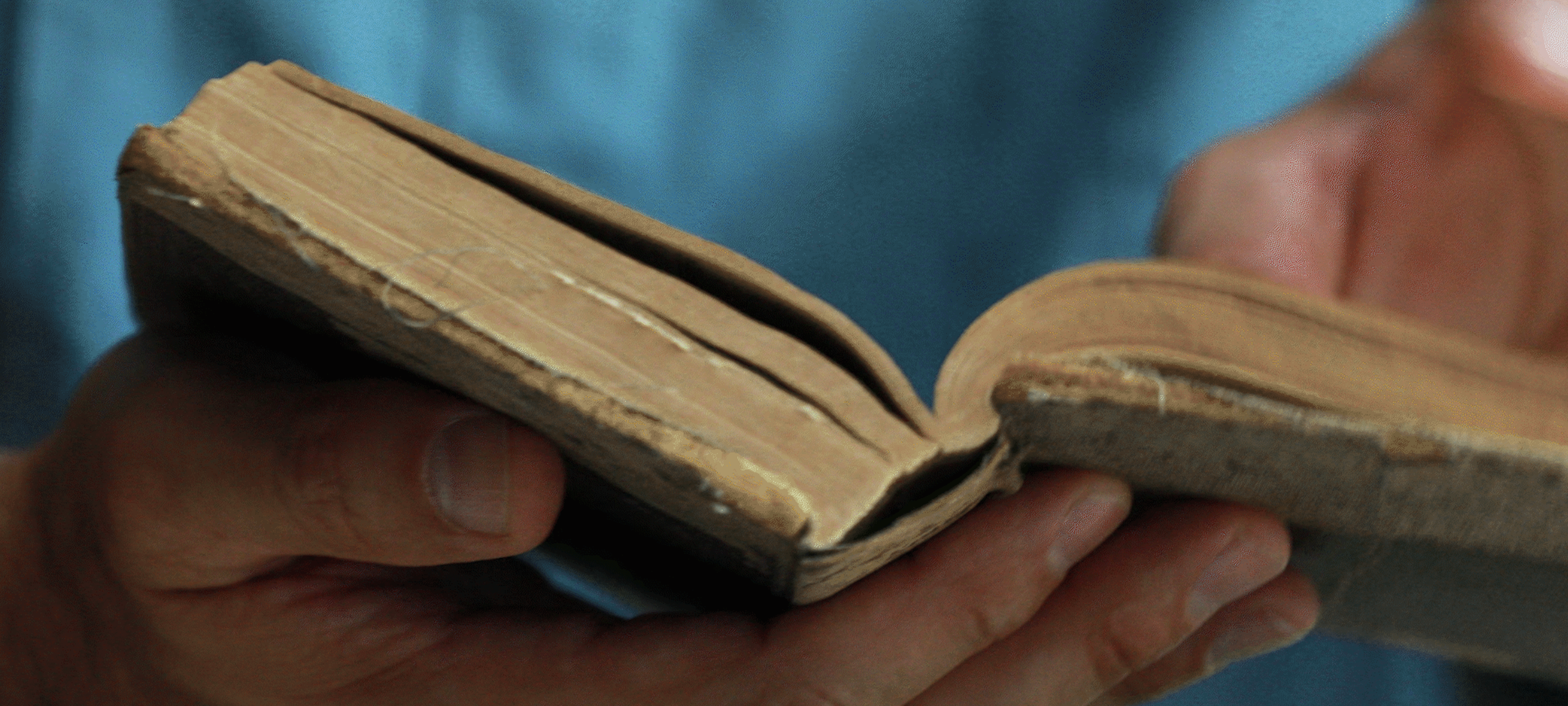
At Fuller we maintain a commitment to the authority of the written words of the Bible for the Christian life. That’s why it’s important to consider what those words say about their limits. They warn us about what they can and can’t do. They alert us to the damage we do when we ignore their limits. In this way the words of the Bible themselves urge us to interpret them wisely. The apostle Paul teaches on this in a letter we call 2 Corinthians.
Paul’s two letters to the Corinthians show that the Christian community in Corinth has found some of its apostles—Paul, Timothy, Titus, and others—to be rather disappointing. Their reputation is suspect. They are not very well funded. They keep ending up in jail. They don’t always visit when they say they will. They seem more anxious about the Corinthians than is expected of genuine authorities, who should be more self-confident. They don’t market God’s word very well, the way others do. They seem to have to commend themselves, instead of impressive letters of recommendation to certify their authority, maybe from the iconic city and apostles of Jerusalem.
In 2 Cor 2:17, Paul responds that he and his team of apostles are not ashamed of their vulnerability to the Corinthians and others. “For we are not peddlers of God’s word like so many; but in Messiah we speak as people of candor, as people from God and in God’s presence.” Paul and his partners have nothing to hide. How could they, as people who speak to their Corinthian friends in God’s presence on the earth, in relationships where God’s historic presence is particularly active? How can we hide from God? We can pretend to, but in time we will be exposed. Paul continues in 2 Cor 3:1.
Are we beginning to commend ourselves again [as you have criticized us for needing to do]? Surely we do not need, as some do, letters of recommendation to you or from you, do we? Our letter is you, written on our hearts. It is known and read by all people, making public that you are a letter of Messiah, served by us, written not with ink but with the Spirit of the living God, not on tablets of stone but on tablets of hearts of flesh. This is the confidence we have through the Messiah before God. Not that we are sufficient of ourselves—to speak something as coming from us. Rather our sufficiency flows from God, who has made us servants of a new testament, [a testament] not of letter but of Spirit. For the letter kills, but the Spirit gives life (2 Cor 3:1-6).
The letter kills when human beings use it as a front of authority that in truth they do not have—like the letters of recommendation the Corinthians covet. They want their apostles’ actual (disappointing) lives to be hidden behind a façade of prestigious text, and they want to hide their own actual lives and complicated relationship with their apostles behind a reassuring curtain of impressive script.
In this way, the letter kills the relational fabric of life: We appeal to written words to impose satisfying closure on what is in fact an unfinished, living reality that cannot be enclosed with letters. We are especially prone to interpret the words of the Bible in this way, tearing the fabric of life apart because we wrongly imagine that is what God’s written word does: finalize and enclose.
Paul explains in the next paragraph of 2 Corinthians that, glorious though it was, the covenant through Moses was liable to be used as an instrument of death. It was a covenant lettered indelibly on precious tablets of durable stone by God’s own finger and then written in our Bibles. But rather than allowing life to flow through the letter by using it to remain open to each other, the people could pretend to measure their life against it, and therefore measure their life against one another. It could be interpreted to hide their life and fuel their mutual hostility rather than feeding their life with the blessing that comes with open-ended truthfulness.
This blessing of truthful, unfinished life comes with difficulty. With truthfulness sometimes comes shame, when we have hurt someone or when someone else has hurt us. Truthfulness exposes our inadequacies instead of minimizing and hiding them, so we are tempted to hide the truth with revered written words—especially words from God, which seem stable, durable, decisive, and final. This is how the letter gives rise to lying, self-righteousness, hypocrisy, callousness, coveting, and other sins that exploit the written words of God’s good law. The consequences are terrible. Deathly. The letter kills.
We play this game of death with written words today. We who hold the Bible to be God’s word can suffer from a kind of code fetishism, as if the Bible were a neat, stable, and total code, whose parts we can use to measure our life as compliant and others’ as not. But in truth there is no such code, in the Bible or any other writing. People’s lives are not so measurable, not so definable, not so writable. The letter kills, but the Spirit gives life.
In my translation of Paul’s letter above, I purposely translated as “new testament” what is usually translated as “new covenant,” so that we can more easily see there is no such thing as a New Testament written in the Bible. (So much for my academic field of New Testament Studies! Turns out, I am Associate Professor of a misnomer.) The “new testament” that Jeremiah foresaw (ch 31) and Paul invokes in 2 Corinthians is not written with letters anywhere. It is not writable as letters. Instead, the actual new testament for the people of God is written on tablets of vulnerable hearts of flesh—which give us nothing to hide behind.
Following Paul’s teaching, let’s not fetishize the Bible as a uniform and stable code that people merely comply with or don’t. Let’s respect its inner tensions and developments and changing perspectives and disturbances, which work on us as we learn the love of the Messiah together, guided by lettered signs that can point to—but are not themselves—the life we are called to live. The Bible remains our highest authority that is written with letters, but our highest authority is not written with letters. It is the unwritable, living God, who writes with Spirit in the flesh rather than with ink, on hearts rather than on pages. Let the written words of the Bible be occasions for the Word of God, which cannot be written down with letters but only enfleshed as unfinished love.

Tommy Givens is associate professor of New Testament