
The problem is that LEGO don’t age.
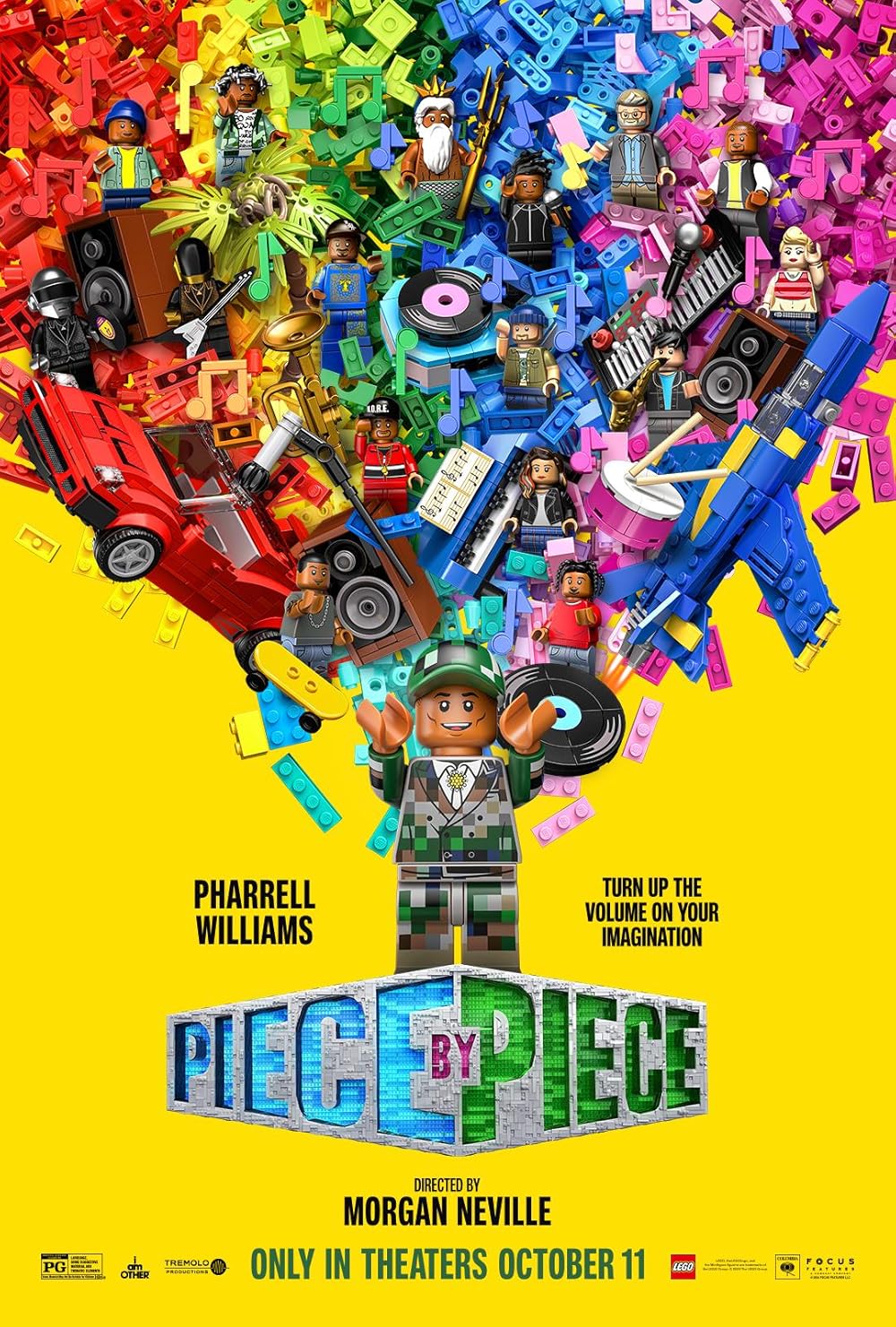
Piece by Piece recounts the life story of musician Pharrell Williams via the documentarian impulses of Morgan Neville, a filmmaker who has made a career out of documenting the “why” behind entertainment industry icons. The film is animated in the style of a LEGO movie as a formal expression of both Pharrell’s beat-building musical style and the tendency of biographers, auto- and otherwise, to build a cohesive whole out of the disparate bits of someone’s life.
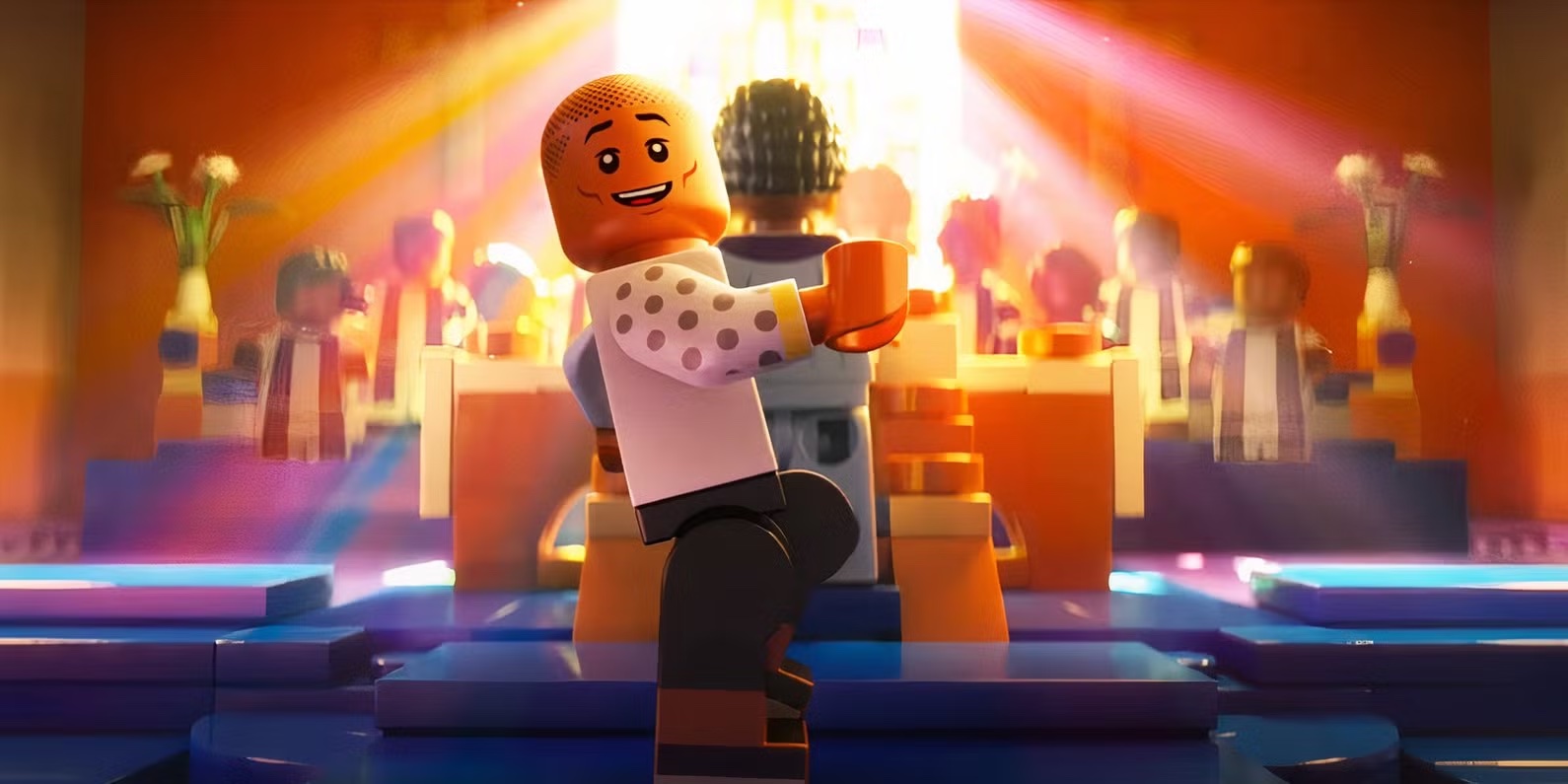
LEGO documentary is a fun idea that, while disorienting and diverting at first, never quite lands the way you hope it will. I puzzled over this for more of the film’s running time than I’m sure anyone hoped I’d be puling over this (instead of just being caught up in the story). The use of LEGO creates a constant distancing effect which is at odds with the aims of the film to connect the audience with Pharrell’s life story. It is inherently inhuman. The passage of time is important in biographies. People grow and learn and change as they age. The world – fashion, architecture, musical styles as well as political and cultural realities – change. A person changes in context of those changes as he or she responds to them. That’s what a biography is. LEGO doesn’t change.
So while it’s interesting to learn about Pharrell’s life story, it never feels especially relevant to the world we actually live in because it’s presented in a world which does not exist. When the film tries to use LEGO to depict societally important moments—the George Floyd protests, for example—it feels removed and false. The documentary is interesting but it isn’t compelling.
Morgan Neville’s documentaries tend to be a little too fond of their subjects. It’s all smooth, rounded edges in his films. This works well when he focuses on someone we would otherwise overlook, like the women in 20 Feet From Stardom. People like the ones in that film need a lift into the spotlight. But Pharrell isn’t struggling, and his problems, which amount to “all this money in complicating my life,” is the kind of problem most people would love to have. It’s interesting that Parrell’s faith community centers and directs him when he is young and yet to succeed. When he needs to recalibrate later, it’s rediscovering himself that pulls him through. That’s in accord with the therapeutic me-ism that dominates our culture. Pharrell’s crowning moment in the film is when he cries on Oprah. Of course.
Autobiography is an exercise in making sense of what was actually just a random series of events which a person responded to as best they could. It’s putting together pieces into a whole. It’s not real, so in that sense, the use of LEGO is appropriate. Maybe we’ll never really know our life story or anyone else’s. We’d have to live through it to know it and even then we don’t really know what’s going on in or around us. We can only shape it into a story in retrospect. But we don’t want to think about that. We want to believe in meaning, that things in our life build to something substantial.
Piece By Piece could have investigated that dynamic. LEGO provides grounds for that, but this movie doesn’t do it. There is no “tear it down and build it back up again” here. Reality isn’t something we construct and reconstruct in this film. It’s the search for a perfect form, a life idealized in the midst of living it, and another LEGO movie has already skewered that impulse in favor of something messier and more alive, an ongoing relationship with a creator who doesn’t expect perfection from us, preferring to work together to build something beautiful, good, and new, piece by piece, constantly in a redemptive flow of free will and vibrant relationship with Love Himself.. I suppose the other limitation of a biography is that it seeks to tell a life story, as in, a single, limited life which will end and which we hope amounts to something. But if you believe in life-everlasting, you don’t need it to all reconcile now. There’s time enough for things to continue to build later, right? Eternal life not sitting on clouds playing harps but sitting on the living room floor with a big box of LEGO building with Dad. That’s heaven for the Father and the son.
The problem is that LEGO don’t age.
Piece by Piece recounts the life story of musician Pharrell Williams via the documentarian impulses of Morgan Neville, a filmmaker who has made a career out of documenting the “why” behind entertainment industry icons. The film is animated in the style of a LEGO movie as a formal expression of both Pharrell’s beat-building musical style and the tendency of biographers, auto- and otherwise, to build a cohesive whole out of the disparate bits of someone’s life.
LEGO documentary is a fun idea that, while disorienting and diverting at first, never quite lands the way you hope it will. I puzzled over this for more of the film’s running time than I’m sure anyone hoped I’d be puling over this (instead of just being caught up in the story). The use of LEGO creates a constant distancing effect which is at odds with the aims of the film to connect the audience with Pharrell’s life story. It is inherently inhuman. The passage of time is important in biographies. People grow and learn and change as they age. The world – fashion, architecture, musical styles as well as political and cultural realities – change. A person changes in context of those changes as he or she responds to them. That’s what a biography is. LEGO doesn’t change.
So while it’s interesting to learn about Pharrell’s life story, it never feels especially relevant to the world we actually live in because it’s presented in a world which does not exist. When the film tries to use LEGO to depict societally important moments—the George Floyd protests, for example—it feels removed and false. The documentary is interesting but it isn’t compelling.
Morgan Neville’s documentaries tend to be a little too fond of their subjects. It’s all smooth, rounded edges in his films. This works well when he focuses on someone we would otherwise overlook, like the women in 20 Feet From Stardom. People like the ones in that film need a lift into the spotlight. But Pharrell isn’t struggling, and his problems, which amount to “all this money in complicating my life,” is the kind of problem most people would love to have. It’s interesting that Parrell’s faith community centers and directs him when he is young and yet to succeed. When he needs to recalibrate later, it’s rediscovering himself that pulls him through. That’s in accord with the therapeutic me-ism that dominates our culture. Pharrell’s crowning moment in the film is when he cries on Oprah. Of course.
Autobiography is an exercise in making sense of what was actually just a random series of events which a person responded to as best they could. It’s putting together pieces into a whole. It’s not real, so in that sense, the use of LEGO is appropriate. Maybe we’ll never really know our life story or anyone else’s. We’d have to live through it to know it and even then we don’t really know what’s going on in or around us. We can only shape it into a story in retrospect. But we don’t want to think about that. We want to believe in meaning, that things in our life build to something substantial.
Piece By Piece could have investigated that dynamic. LEGO provides grounds for that, but this movie doesn’t do it. There is no “tear it down and build it back up again” here. Reality isn’t something we construct and reconstruct in this film. It’s the search for a perfect form, a life idealized in the midst of living it, and another LEGO movie has already skewered that impulse in favor of something messier and more alive, an ongoing relationship with a creator who doesn’t expect perfection from us, preferring to work together to build something beautiful, good, and new, piece by piece, constantly in a redemptive flow of free will and vibrant relationship with Love Himself.. I suppose the other limitation of a biography is that it seeks to tell a life story, as in, a single, limited life which will end and which we hope amounts to something. But if you believe in life-everlasting, you don’t need it to all reconcile now. There’s time enough for things to continue to build later, right? Eternal life not sitting on clouds playing harps but sitting on the living room floor with a big box of LEGO building with Dad. That’s heaven for the Father and the son.

Elijah Davidson is Co-Director of Brehm Film and Senior Film Critic. Subscribe to Come & See, his weekly newsletter that guides you through the greatest films ever made, and find more of his work at elijahdavidson.com.
Leap of Faith is both a hope-filled picture of an impossible possibility and a chance to consider whether, as Christians, we really do have the courage of our convictions.