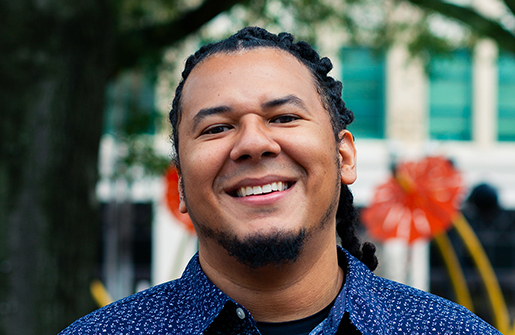
When Ashley Abercrombie (current MJA student) began working as a chaplain in Los Angeles County jails, she thought she knew the system because of her own past. “In my early adulthood, I had my own run-ins with the law, including multiple warrants out for my arrest,” she admits. “Most were related to poverty. You know, when you have to choose between taking a day off work to show up for court or going to work so you can pay this month’s rent, the issue isn’t lawlessness but poverty. It only takes a handful of missed court dates for the debt to really start piling up.”
When she got serious about taking the posture of a learner, however, she started seeing the US criminal justice system from other people’s points of view. She says, “It didn’t take long for me to discover how much my skin color had protected me.” Ashley had, for example, been pulled over multiple times with outstanding warrants for unpaid fines but was never taken into custody. But as a chaplain, she met a woman who had been shopping at Target with her young son (the same age as Ashley’s oldest at the time) when she’d been arrested and booked into jail for unpaid fines. “She was running an errand, and then her world was turned upside down. The only difference between her and me was the color of our skin.”
Ashley goes on, “My race had often spared me from some of the worst consequences of my choices, and I’d had no idea. Time in the jails opened my eyes to disparities at the intersection of class, race, and gender, and that’s something you can’t unsee. Wherever God leads me in the future, leveraging my privilege for the sake of justice will always be a piece of it—and prison chaplaincy gave me that.” While she’s not presently working as a chaplain, she credits that season of ministry for her trajectory.
When she first felt a stirring toward jail ministry, Ashley initiated a conversation with Dr. Mary Glenn, professor of chaplaincy and community development at Fuller and a chaplain with the police department. A mutual friend had introduced them, and Ashley immediately began pumping Dr. Glenn for information: “What does it take to be a good chaplain? What does it take to minister well to people in jails? What do I need to know? She taught me so much about listening and about the ministry of presence.”

Aly Hawkins is editorial director & senior writer at Fuller. Find more of her work at thewritingvicar.com.

Kristin M. Young (MDiv ’24) is a teacher, writer, and photographer. See more of her work at kristinmyoung.com.
When Ashley Abercrombie (current MJA student) began working as a chaplain in Los Angeles County jails, she thought she knew the system because of her own past. “In my early adulthood, I had my own run-ins with the law, including multiple warrants out for my arrest,” she admits. “Most were related to poverty. You know, when you have to choose between taking a day off work to show up for court or going to work so you can pay this month’s rent, the issue isn’t lawlessness but poverty. It only takes a handful of missed court dates for the debt to really start piling up.”
When she got serious about taking the posture of a learner, however, she started seeing the US criminal justice system from other people’s points of view. She says, “It didn’t take long for me to discover how much my skin color had protected me.” Ashley had, for example, been pulled over multiple times with outstanding warrants for unpaid fines but was never taken into custody. But as a chaplain, she met a woman who had been shopping at Target with her young son (the same age as Ashley’s oldest at the time) when she’d been arrested and booked into jail for unpaid fines. “She was running an errand, and then her world was turned upside down. The only difference between her and me was the color of our skin.”
Ashley goes on, “My race had often spared me from some of the worst consequences of my choices, and I’d had no idea. Time in the jails opened my eyes to disparities at the intersection of class, race, and gender, and that’s something you can’t unsee. Wherever God leads me in the future, leveraging my privilege for the sake of justice will always be a piece of it—and prison chaplaincy gave me that.” While she’s not presently working as a chaplain, she credits that season of ministry for her trajectory.
When she first felt a stirring toward jail ministry, Ashley initiated a conversation with Dr. Mary Glenn, professor of chaplaincy and community development at Fuller and a chaplain with the police department. A mutual friend had introduced them, and Ashley immediately began pumping Dr. Glenn for information: “What does it take to be a good chaplain? What does it take to minister well to people in jails? What do I need to know? She taught me so much about listening and about the ministry of presence.”
Aly Hawkins is editorial director & senior writer at Fuller. Find more of her work at thewritingvicar.com.
Kristin M. Young (MDiv ’24) is a teacher, writer, and photographer. See more of her work at kristinmyoung.com.
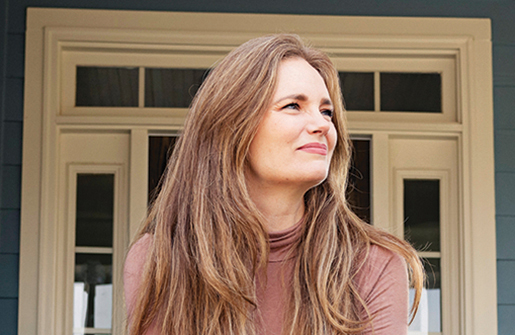
That phrase, “ministry of presence,” comes up again and again in our conversation. Ashley explains, “When I think about chaplaincy, I think about the capacity to be with, to be present with another person in their pain or struggle. Not to try to fix them, save them, or recommend three steps to healing and ten steps to growth—but instead to be present with them right where they are.”
“Christ’s incarnation,” she contends, “is the ultimate model of being with: He became flesh to live among us.” At their best, she says, chaplains offer an extension of God’s presence in Christ in real time to people who, because of their circumstances, are in a moment when they can deeply feel their need for him.
Chaplains, in turn, experience God’s presence for themselves in those encounters. “Aside from the birth of my children, I don’t think I have encountered God the way I did in jails. God is alive there. His presence is powerful there. When you’re talking on a phone with someone on the other side of the glass, the Spirit of God still moves. You can’t touch the person. You can’t hold them. You can’t connect the same way as if you were sitting on a couch next to them, offering tissues and comfort as their tears flow. Yet the connection is real just the same. When people feel safe to share, when they don’t feel judged for the mistakes they’ve made or for the injustice that may have just happened to them, so often they open up.”
That’s the real beauty of chaplaincy, she says, and that “being with” is something she tries to carry into every area of her life, now that she is no longer serving in the jails. “I can do that for a coworker; I can be with. I can do that with a neighbor; I can be with. I can be with in the Starbucks line when someone starts a conversation with me.”
In many ways, chaplaincy sustained Ashley’s own faith. “I can honestly say that without those encounters with God at the margins, far outside the walls of a church, I would have walked away—because my faith was too shallow to sustain itself. I love the church. I preach and teach and lead in the church. But God is alive in jails and strip clubs and other marginal places of our society, and meeting him there saved my faith.”
As she begins to recount specific encounters from her time in the jails, she recalls many stories of how she met God in unexpected places: “The program I was a part of in LA served people who had just been arrested. If they were arrested on Friday night, they’d sit in holding over the weekend until courts opened on Monday, and that in-between time is when we’d have a chance to connect with them.” She met people in every condition you can imagine: “coming down from a high, busted up from a gang fight, dressed for their work as a street prostitute, unshowered and homeless and wearing every piece of clothing they owned.”
Ashley shares, “I once sat with a man who had just been arrested for his third strike. He had been trying to get clean and get his life together, but then relapsed and committed a violent crime.” Now he was facing 25-to-life for his third serious felony.
While Ashley herself has never committed a violent crime, she’s familiar with the shame and guilt of relapse. She’s been sober for over two decades, but she says, “my recovery journey has not been a straight line. And so, sitting there with this image-bearer of God, I told him he was loved. ‘No matter where you’ve been or what you’ve done, you are loved. And nothing you can do will ever change that.’ It was such a holy and human moment. We both experienced God. We cried together as grace washed over us. I’ll never forget it.”

Another time, Ashley recounts, she was with a team of six chaplains on a Saturday morning in the Van Nuys jail. A whole crew of gang members had been arrested the night before, so several chaplains were called in to be available. She says, “Between the silence of gang loyalty and the fact that we were in this big room so that everyone could see everybody else, I had pretty low expectations when it came to vulnerability.” A few of the inmates trickled in and asked for prayer, but eventually, the crew leader came in. His presence changed the whole atmosphere of the room, she remembers, shutting everything down. “He was so hard. The other guys finished their conversations and left, then it was just the leader still sitting with us—and he just broke. Uncontrollable weeping. Just so sincere and remorseful, so burdened by the wrong he had done and led others to do. He broke wide open and was ready to receive grace.”
It was entirely outside of what Ashley had come to expect. For one thing, she reminds me, a chaplain’s goal is never to proselytize: “It’s just to be present, to embody love, to hope and pray that the gift of loving presence plants a seed that the Spirit may coax to life later. But then, every once in a while, a rare moment comes along when someone cries out to God for rescue and transformation, and you get to be there when God comes. This was one of those moments.”
She doesn’t know what happened to the crew leader after that Saturday morning in the Van Nuys jail, but she knows down to her bones that she saw God begin a good and life-giving work in him, saying “I trust the Lord will not fail to complete it.”
Ashley, who has been involved in many types of ministry over the course of her life—leadership in the local church, recovery ministry, program development—shares that there’s a combination of two things distinct to chaplaincy work: nonjudgmental presence and intercession. She says, “Chaplains choose to be lovingly present with those who other people might deem unlovable, and the way we’re able to do that is by a discipline of prayer. A chaplain absolutely has to have a life defined by prayer. That’s the only way we can love the literal hell out of people without any stigma, with zero judgment and no desire to fix or change them. Drawing close to Jesus in prayer is how we become like him in love, service, and nonjudgmental presence.”
Releasing judgment is difficult, she acknowledges. It’s something she both brought to chaplaincy and learned from it. “When I started, I’d had maybe 14 or 15 years of sobriety, so I came in with a pretty wide capacity for grace. You don’t spend that many hundreds of hours in recovery rooms, hearing the worst of people’s mistakes, grievances, and cruelties—and sharing your own—without learning some tenderness. But even a wide capacity for grace has limits if you’re operating solely in your own power.”
Ashley offers the example of praying with a sex offender. “My commitment to nonjudgment was tested, let me tell you! I was angry. I didn’t want to be present. I didn’t want to pray for him, to be perfectly honest.”
Part of chaplaincy training, though, she explains, is learning to be self-aware and tuned into one’s own feelings and reactions. “As I felt those responses rising up in me, I took a moment to pray, trusting God’s grace to close the gap between how I felt and what the son of God on the other side of the glass needed from me.” Ashley recalls that Paul says God’s power is made perfect in our weakness (2 Cor 12:9), and testifies that she repeatedly experienced that as a chaplain, “especially in moments when I wanted to be like, ‘Can I pass this guy off to someone else?’ Time and again, the Spirit would close the gap, and I’d find myself loving in spite of my biases and prejudices. God’s grace really does empower us to do things we can’t do on our own.”
Paul Bullock reimagines how the church might faithfully live out the gospel for and amidst our communities in our pluralistic world.